

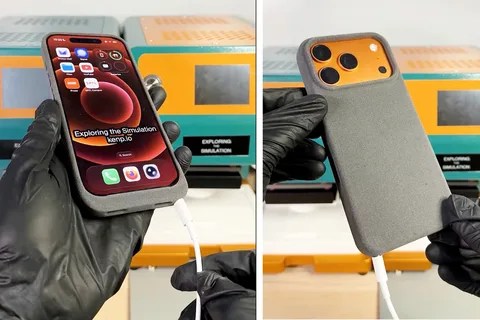
Any user who moves from the iPhone 14 or earlier to the new iPhone 17 Pro from Apple will face an urgent need to replace their old accessories that rely on the Lightning port or constantly carry an additional adapter. One of those interested in modifying devices revealed the possibility of equipping this pioneering and modern phone with a traditional Lightning port with ease by using an innovative protection cover that was designed specifically for this purpose to provide a practical and comfortable solution for users.
Over the past few years, Ken Bellonel has succeeded in converting many old iPhones to operate via the USB-C port with the addition of a 3.5 mm headphone jack. His online store displays protective covers that add modern ports to the previous iPhone 13 and iPhone 14 models, while on April 1, this creative engineer decided to work on providing the current iPhone 17 Pro phone, which is sold at a price of 1,149 US dollars, with a Lightning port instead.
This protective cover is primarily considered an entertainment and fun project, as the designer does not intend to put it up for commercial sale in the markets. This innovative project proves the possibility of charging the current iPhone via the old and proprietary Apple connector with moderate effort, as the idea seems very simple from a technical standpoint and relies on integrating a 3D-printed protective cover with a modified adapter to reduce the space it occupies so that the cover adds only a few millimeters to the bottom edge of the phone.
The iPhone 17 Pro supports charging successfully via this added port, but Bellonil did not specify whether this port can be used to transfer data or connect other accessories. The official adapter, available in the Apple Store at a price of $29 US, allows data transfer and connection of headphones, noting that data transfer operations are limited to the USB 2.0 standard as is usual with these ports, with data transfer speeds reaching a maximum of 480 Mbps.
This engineering experiment highlights the ongoing technical transition phase that the phone industry is witnessing, with the gradual abandonment of old ports in favor of unified global standards. Despite the complete shift towards newer ports that provide much higher charging and data transfer speeds, such creative projects meet the desires of a segment of users who prefer to make the most of their old cables and accessories for the longest possible period instead of getting rid of them and buying completely new accessories.