
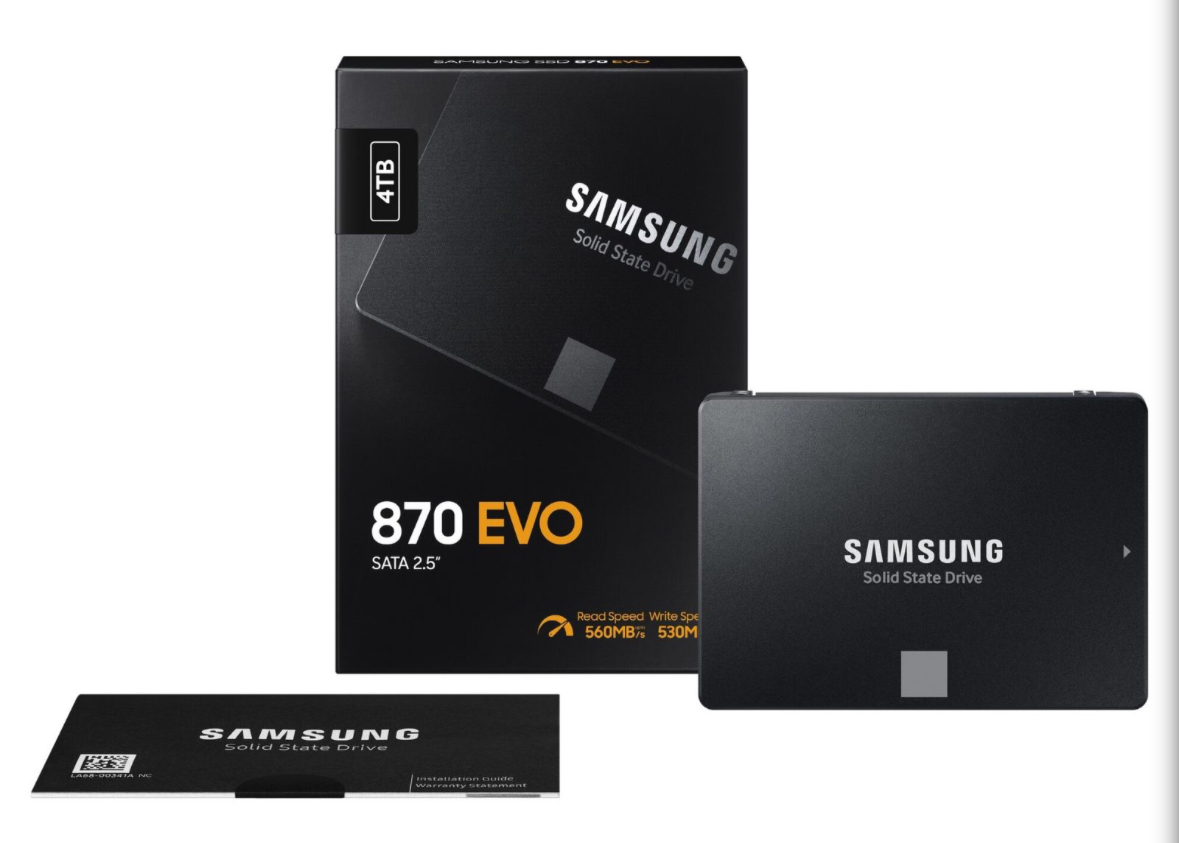
Samsung is preparing to end its activity in the SATA SSD market, a move whose price implications may be more severe than Micron’s decision to stop Crucial consumer memory, according to new leaks from Tom, host of the Moore’s Law Is Dead channel on YouTube.
Tom explained, citing multiple sources in the distribution and retail channels, that Samsung plans to gradually exit the production of SATA SSDs in the long term, after completing current commitments. These leaks came in conjunction with other reports that talked about Samsung raising the prices of DDR5 memories by up to 60%.
Despite the decline in interest among advanced users in SATA drives, they still command a significant share of sales, especially in the economy category and hardware upgrades, where they constitute a significant percentage of the best-selling storage drives on platforms such as Amazon.
Accordingly, Tom believes that the exit of a large supplier such as Samsung will reduce supply, putting upward pressure on SSD prices in general, whether SATA or NVMe, at least in the near and medium term.
Tom points out that the problem is not that the SATA interface is technically obsolete, but rather the amount of supply it still represents. According to his estimates, about 20% of the best-selling SSDs are based on SATA, and Samsung products constitute a significant portion of this percentage. With this volume withdrawn from the market, a price increase becomes almost inevitable.

This scenario is also consistent with the expectations of memory industry expert Dave Eggleston, who recently suggested that NAND SSDs will be the next component in personal computers to see a price increase.
In contrast to what happened with Micron, Tom confirms that Samsung’s move is not just a change in the brand, but rather an actual exit from producing an entire category of consumer products, without compensating them through other brands. This makes the impact more severe, especially with companies and users likely to pre-purchase in anticipation of a shortage in supply.
In the longer term, Tom expects price pressures to gradually ease as the focus returns to consumer hardware by 2027, driven by the expansion of domestic AI applications and upcoming gaming consoles. However, he warns that the era of cheap SATA SSDs, especially from Samsung, may already be over.