

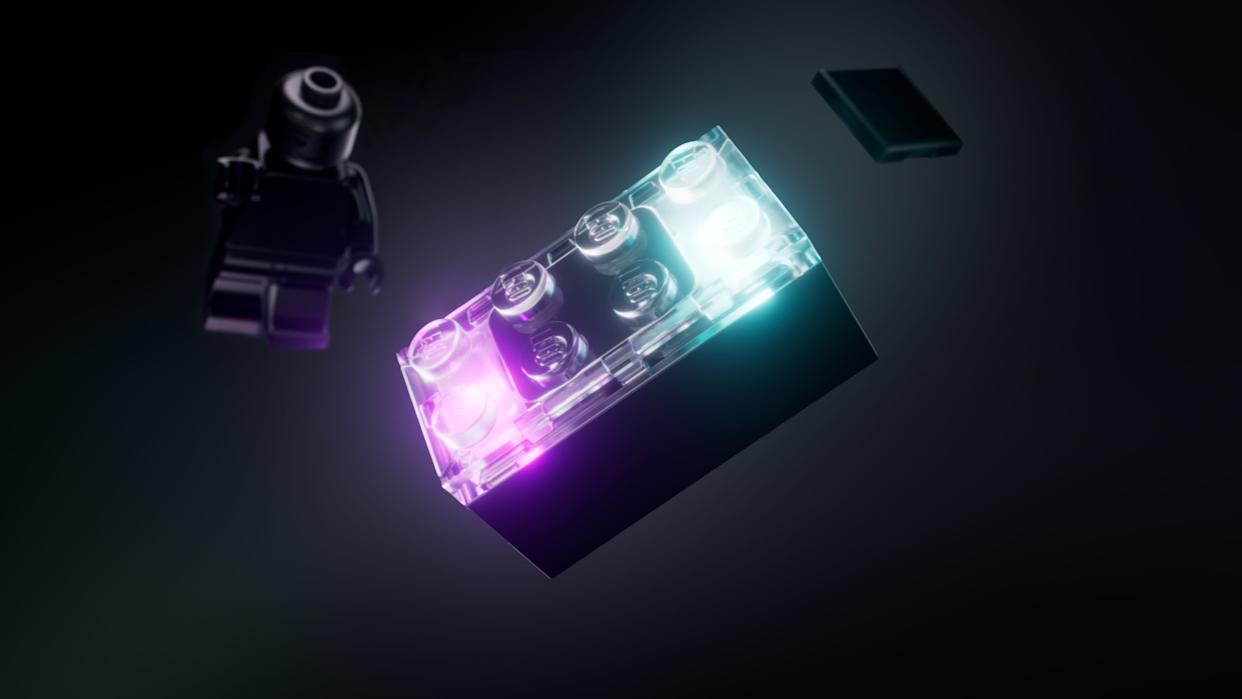
Lego announced a new system called the Lego Smart Brick during CES 2026 in Las Vegas on January 5, 2026, which is a smart brick embedded with advanced technologies that aims to transform traditional building toys into digital interactive experiences. The device is a bold step for the company in integrating artificial intelligence and electronics into its classic products.
The Lego Smart Brick has an internal processor, motion sensors, a microphone, a small speaker, a rechargeable battery that lasts weeks, and Bluetooth connectivity to communicate with a smartphone app or other devices. The brick can recognize movements and sounds, emit sound effects, turn on built-in LED lights, and interact with other bricks to create interactive structures, such as a car that makes an engine sound or a tower that lights up when touched. The device supports a partially native AI model for privacy, with the ability for in-app updates to add new scenarios.
At the show, Lego showed models such as a castle that reacts to sounds or a robot that moves based on voice commands, with an emphasis on educational use to teach children programming and physics in a fun way. The device is compatible with traditional Lego bricks, with starter packs containing 100-200 smart bricks.
Lego has not announced a specific price for the package, but it is expected to start at $150 to $300 depending on size, with availability in the second half of 2026, starting with the US and European markets.
Lego Smart Brick is seen as an attempt to revive building toys in the age of artificial intelligence, competing with products such as the earlier Lego Mindstorms, but with a greater focus on ease and everyday interactivity.