

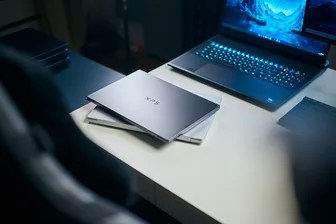
Like many major companies, Dell has sent out spec sheets and press information in advance of CES 2026 for the devices it plans to announce at the show.
These new devices include the Dell XPS 14 and XPS 16, as well as the Alienware 16 Area-51 laptop and desktop, all of which share a feature that may not be obvious at first glance.
Although all of these devices use chips that other manufacturers heavily tout for their AI capabilities, Dell completely avoids mentioning this topic in its marketing materials. In fact, the word “AI” is only mentioned once in the one sentence that concludes the “About Dell” paragraph in every press release, and many likely won’t read it.
When asked by Dell, Kevin Terwillinger, Chief Product Officer, responded: “We’re very focused on delivering AI capabilities in our devices. Every device we announce has an NPU, but what we’ve learned this year, especially from a consumer perspective, is that they’re not buying devices based on AI. In fact, I think AI confuses them more than it helps them understand the desired outcome.”

With this, Dell is pursuing a dual strategy at CES this year, refocusing on the XPS series and putting AI in the background. Last year, artificial intelligence was a major topic in its press releases.
This approach is understandable, as native AI applications for creating text, images, and video are still inaccessible to most consumers, and pre-installed applications from manufacturers and Microsoft offer limited value.
For example, the 2023 LG Gram 17 came with a presence detection feature, which was remarketed in 2025 as an artificial intelligence tool, and similar changes occurred in Dell, Acer, Asus, and others. With these programs running on the NPU in new processors from Intel and AMD, performance has become more efficient.
Finally, apps like Copilot+ don’t work offline, like Gemini, ChatGPT, and Grok, so they don’t add obvious value for users unless they dig deeper.