

Sunday 28/December/2025 – 04:29 AM
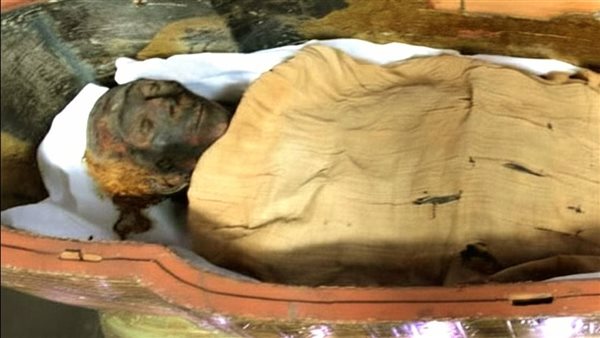
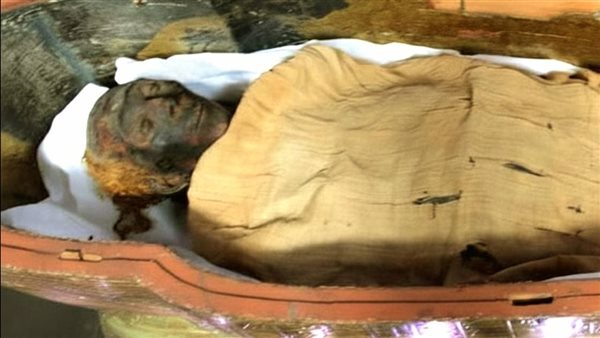
The mummy of Toya, the mother of the famous Queen Ti, receives visitors to the Egyptian Museum in Tahrir as one of the most important living evidence of the history of a royal family that played a pivotal role in ancient Egypt. Although more than 3,300 years have passed since her passing, her calm facial features are still amazingly clear, with the remains of strands of her carefully preserved brown hair, giving the visitor a direct sense of a human being who lived and made history.
Toya’s mummy reveals the secrets of a royal family that changed the course of history at the Egyptian Museum
Toya returns to the city of Akhmim in Upper Egypt, where she was an elite woman and held high religious positions, including the singer of the goddess Hathor, and the head of the artists of Amun and Min, which reflects her high social and religious status.
This influence did not stop at her borders, but was passed on to her daughter, Ti, who grew up in a strong religious and cultural environment that made her one of the greatest women of ancient Egypt.
Queen T emerged as the great wife of King Amenhotep III, the mother of King Akhenaten, and the grandmother of King Tutankhamun. Although she did not descend from a purely royal lineage, her strong personality and exceptional status made her name recorded in international official documents, and the rulers of foreign countries dealt with her directly as a political partner, in a rare precedent that reflects her unprecedented influence.
The Egyptian Museum in Tahrir is considered one of the oldest and most important archaeological museums in the world, as it includes the largest integrated collection of antiquities of ancient Egyptian civilization, extending from prehistoric times to the Greek and Roman eras. The museum contains thousands of unique artifacts, including treasures of kings, mummies, and rare collections of royal families who influenced the history of the modern state.
The treasures of the tomb of “Yuya and Thuya” displayed on the upper floor of the museum provide a unique opportunity to learn about the story of the rule, power and legacy of a family that changed the face of ancient Egyptian history, as the mummy and the artifacts accompanying it transform from mere silent relics into a living narrative about the influence, political role, and exceptional status of women in ancient Egypt.