

Wednesday 18/February/2026 – 12:48 AM
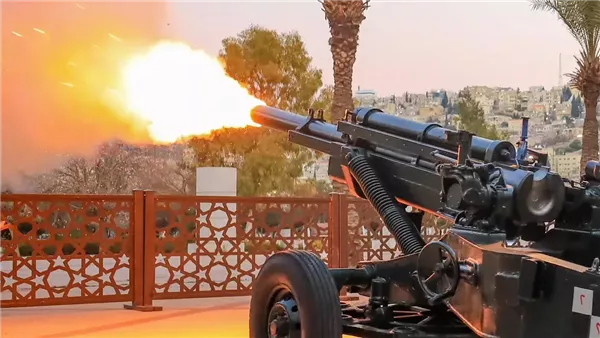
The Iftar cannon is one of the most prominent symbols associated with the month of Ramadan in Egypt and the Islamic world, as its sound has been linked over many decades to the moment of sunset and the announcement of the date. BreakfastBefore it turned from a passing incident into an inherited popular tradition.
The story of the breakfast cannon
The story of the Iftar cannon goes back to the nineteenth century, when historical accounts indicate that it was fired by chance from the heart of the Saladin Citadel in Cairo during a test of one of the cannons at sunset during the month of Ramadan.

The launch of the missile coincided with the Maghrib call to prayer, so people thought that it was intended to inform them of the time for breaking the fast, and this method quickly met with widespread approval among the people.
As the experiment was repeated, the ruling Mamluk state in Egypt at the time realized the importance of the cannon as an accurate and unified means of announcing the time for breaking the fast, especially in a time when clocks were not widespread or means of communication available to everyone.
Over time, the Iftar cannon was officially adopted and fired daily at sunset throughout the month of Ramadan, and the Suhoor cannon was later added in some cities.
After the experiment proved successful in Egypt, the tradition of the breakfast cannon quickly moved to a number of Islamic countries, as Istanbul adopted it during the Ottoman era, and from there it spread to the Levant, then it reached Mecca and Medina, before spreading to North Africa, and even some regions of Central Asia.
The role of the breakfast cannon was not limited to being a means of warning, but rather it turned into a festive symbol that carries social and spiritual connotations, and was linked to collective memories among adults and children.
With the development of modern technology and the emergence of radio, television, and smart applications, the cannon remained present in a number of Arab countries, in order to preserve its heritage value.
Although the practical need for the iftar cannon has diminished, its continuation reflects societies’ adherence to the elements of their Ramadan identity. The sound of the cannon is no longer just an announcement for breaking the fast, but rather has become part of the rituals of the holy month, evoking the past and embodying the spirit of joy and social cohesion that characterizes Ramadan.