

Saturday 04/April/2026 – 05:56 AM
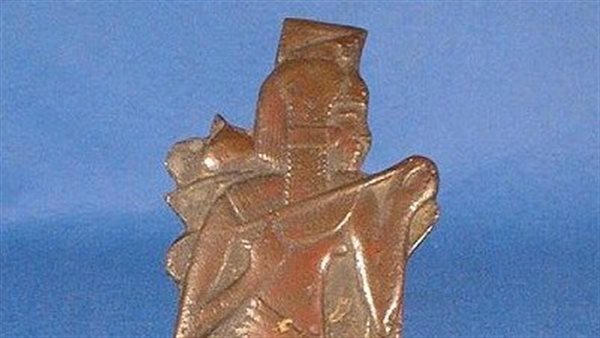
The Royal Museum of Arts and History in Brussels preserves a rare bronze piece of art representing a small decorative painting of an oud player. It is considered one of the most prominent pieces of evidence of the development of the arts during the New Kingdom in ancient Egypt, specifically in the Eighteenth Dynasty period.
Oud player
The piece bears inventory number E.2244, and is about 19 cm high. It was formed using the bronze casting technique, and it is believed that it was used to decorate one of the columns in the temples of Thebes, before it returned to Europe in the collection of the traveler Jean Luz, one of the participants in the Napoleonic campaign in 1798.
The painting shows an oud player standing on top of a papyrus boat, in an artistic scene that reflects the connection of music to religious and daily life in ancient Egypt. It is a scene that is also known from scenes of tombs and funerary tools, and sometimes even took the form of small amulets.
The piece dates back to the era of King Tutankhamun, as it shows a clear influence of Amarna art, which was distinguished by its different realistic style, especially in the features of the body and the position of the player, as he appears with a body wrapped in a folded dress and with a prominent stomach, which are artistic features associated with the period of King Akhenaten’s rule.
This artwork reflects the extent of the development of artistic taste at that stage, and the merging of musical symbols with spiritual life, embodying an important aspect of the ancient Egyptian artistic heritage whose influence extended throughout the ages.