


Monday 23/March/2026 – 02:33 PM
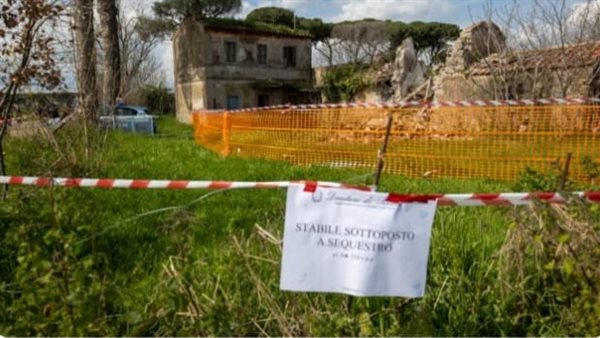
Security authorities continue to operate in the Italian capital Rome Its efforts to unravel the circumstances of the explosion that occurred in the Casale del Cellaretto area, which resulted in the killing of anarchist activists Alessandro Mercogliano and Sara Ardizzone.
Preliminary data indicate that the two victims were working on assembling a homemade explosive device, before it exploded by mistake.
The Anti-Terrorism Office, under the supervision of Assistant Prosecutor Giovanni Cunzo, is focusing on identifying the target against whom the device was supposed to be used. Given the location of the incident near the Garden of the Arches, investigators believe the potential targets are within a limited geographic range, and include:
Security facilities, including a Carabinieri barracks and the Central Anti-Crime Operational Center on Tuscolana Street.
And vital infrastructure, such as railway lines, and defense sector facilities, including the “Leonardo” industrial company, which was previously targeted by anarchist groups.
Nature of packaging and layout
Technical reports indicated that the explosive device was large in size, making it difficult to transport it inside a regular bag, which suggests the possibility of the presence of partners who contributed to the transportation operations and logistical support. Analysis also indicated that the explosives were intended for immediate use, suggesting that implementation was planned within a short period of time from the moment of assembly.
The two dead are not far from the security monitoring circles. Sara Ardizzone was known for her hard-line stances and open hostility to the state, including her statements in courtrooms.
As for Alessandro Mercogliano, he was linked to previous investigations in Genoa in 2012, against the backdrop of an attack targeting the director of the “Ansaldo Energia” company.
Anarchist reactions
On the other hand, groups affiliated with the anarchist movement issued a statement in which they mourned the two dead, describing them as comrades who fell in the arena of confrontation, considering that their march was an expression of rejection of state authority. This coincided with the appearance of graffiti on the walls of some Rome metro stations threatening revenge and calling for targeting the persecuted.
Continuous security measures
The Digos political police carried out several searches at sites suspected of being linked to the anarchist movement, and confiscated materials that are currently being examined. While initial hypotheses tend to be that the incident occurred during the process of preparing the device, investigations are still ongoing to reveal whether there is a broader organizational network behind this activity.