


Friday 20/March/2026 – 10:06 PM
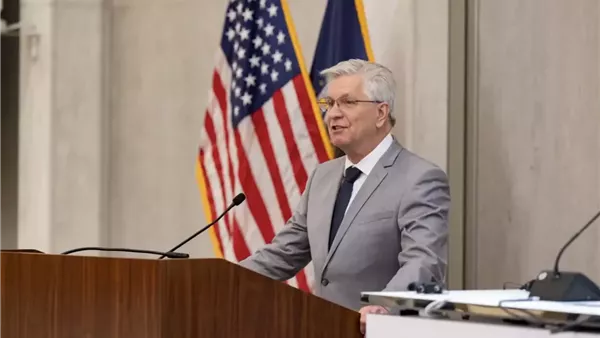
Christopher Waller, a member of the US Federal Reserve Board of Governors, expressed growing concerns about the repercussions of the raging conflict in the Middle East on the path of global inflation, warning that the continuation of tensions and the closure of the Strait of Hormuz for a long period will keep oil prices at high levels, doubling inflationary pressures on the US economy.
Member of the Federal Reserve: The Middle East conflict doubles the inflationary pressures on the American economy
Waller revealed, in an interview with CNBC, that his previous conviction, which was leaning toward lowering interest rates to support the labor market, has changed over the past two weeks, stressing that the escalation of energy risks has made inflation a greater concern than expected.
Waller explained that the closure of the Strait of Hormuz, through which about a fifth of global energy supplies pass, threatens to transform the temporary price shock into extended structural inflation that is difficult to ignore, especially since oil is an essential component that is included in the cost of most goods and services, including the fertilizer sector and international supply chains.
He pointed out that the state of uncertainty about the duration of the conflict, which erupted in the wake of the US-Israeli attacks on Iran on February 28 and the subsequent reactions in the Gulf, puts the central bank in a position of “cautious anticipation” in line with the trend confirmed by Federal Reserve Chairman Jerome Powell.
Despite his previous support for lowering interest rates to stimulate growth and confront the weakness of the labor market, Waller stressed that the priorities of the current stage necessitated supporting the Federal Reserve’s decision to keep interest rates unchanged, while raising inflation expectations for the year 2026.
Waller concluded his statements by noting that, although the need to raise interest is currently ruled out, the upcoming data will determine the final trend, stressing his tendency to give priority to the labor market in the event of a sharp conflict between the goals of price stability and reducing unemployment.