
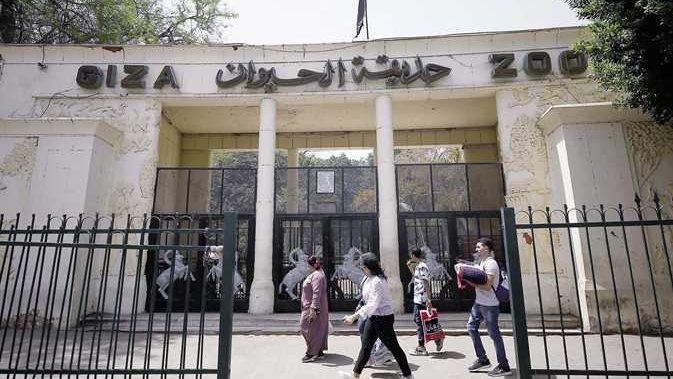
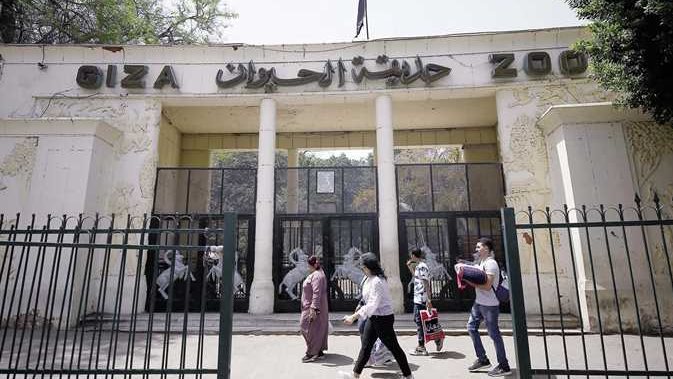
The development project for the Zoo and Orman Gardens is the huge project awaited by millions. It is not limited to formal renovations, but rather represents a qualitative leap aiming to transform the two gardens into a global educational and entertainment destination with modern standards, with interactive designs.
In this regard, Engineer Adel Al-Najjar, Governor of Giza, confirmed that the zoo development project will transform it into a leading entertainment and educational icon that receives visitors from various parts of the Republic, noting that the project is being implemented according to an integrated vision that restores the zoo’s regional and international status.
The governor explained during his tour of the park that it represents an important service and entertainment addition to the people of Giza due to the wide green spaces and recreational areas it contains that were designed and implemented in the style of international open zoos.
The governor’s statements came during his inspection tour to follow up on the rates of implementation of development work for the project to revive the Zoo and Orman Parks in southern Giza.
The governor was briefed on the components of the project by Mohamed Kamel, Chairman of the Board of Directors of the “Hadayek” Company for the development, management and operation of the Zoo and Orman Parks, stressing the governorate’s keenness to facilitate procedures and overcome obstacles facing the implementing company to ensure the completion of the project within the time frame and planned specifications given the importance of the park as a historical and cultural outlet for citizens.
The governor was assured of the completion rates of the first phase of development, which included the completion of infrastructure work, including water and drainage networks, and the restoration of more than 90% of the archaeological buildings inside the park, explaining that these works form the basis for starting the development of animal display areas.
The governor explained that coordination is underway to allocate parking lots outside the park and in its vicinity to accommodate the expected visitor movement following the opening of the project, stressing that these parks will contribute to organizing traffic and preventing congestion while providing safe entry and exit paths that ensure easy access for citizens to the park without affecting public movement in the area.
During the meeting, the operating plan was reviewed, which includes establishing three educational centers specialized in biology, environmental studies, and programs directed at children, appointing 60 specialized agricultural engineers, and establishing advanced medical units, a veterinary hospital, and a licensed pharmacy to ensure the highest levels of care for animals.
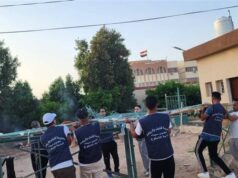
The governor was also keen to conduct a field visit to the works inside the park, during which project officials accompanied him to review the progress of work and ways of coordination between the governorate authorities and the company.
He inspected the paths and corridors that are being prepared for visitors, and the designs being implemented, which took into account achieving a clear vision for the distribution of the park’s components and animal display areas in a way that ensures an interactive and comfortable viewing experience for visitors and in accordance with international standards.
The governor was briefed on the new designs that rely on creating open natural environments that suit the nature of each type of animal while abandoning the traditional style of narrow cages.
The governor also reviewed the operating plan, which includes an integrated digital system that includes electronic ticket sales, information applications for visitors, covering the park with surveillance cameras, and a health, nutritional, and behavioral information system for animals that contributes to raising management efficiency and improving the educational experience for visitors.
The largest green space in Giza
The governor pointed out that the total area of the Zoo is 86 acres, and the Orman Garden is 28 acres, explaining that the two gardens were merged as a natural extension of each other, allowing the creation of a wide and integrated environmental scope that enhances the aesthetic and recreational value of the site, and gives visitors a more diverse and richer experience within the largest open green space in the heart of Giza.
Development plan
For his part, Muhammad Kamel explained that the development plan includes importing 118 new species to add to the currently existing species of animals from multiple countries, including four lions and three tigers arriving for the first time in the park, in addition to importing 362 additional animals to enhance biological diversity, with appropriate spaces allocated to each species.
Kamel confirmed that the park hosted a representative of the African Union Association, who conducted a comprehensive review of the development processes, and that the delegation’s comments confirmed the project’s commitment to international best practices, noting that the plan attaches great importance to preserving the historical and architectural character of the park.
This came in the presence of Major General Majid Al-Sarti, Chairman of the Board of Directors of the Military Production Projects Company, Mohamed Kamel, Chairman of the Board of Directors of Hadaeq Company for the development, management and operation of the Zoo and Orman Parks, Abdel Fattah Faizi, Managing Director of Hesco Gardens and Dairy Company, a consultant expert in zoos, Katharina Drucker, Director of the Zoo, and some members of the Board of Directors of the National Alliance for the Development of the Zoo and Orman Parks.