


Tuesday 24/March/2026 – 01:18 PM
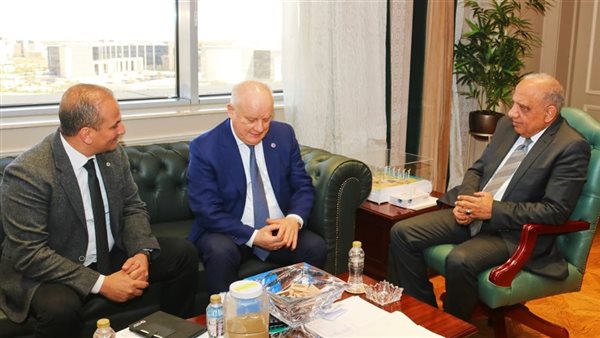
He met Dr. Mahmoud Esmat Minister of Electricity and Renewable EnergyAndrei Petrov, First Deputy Director General of the Russian State Atomic Energy Corporation “Rosatom” and the head of the “Atomstroyexport” company responsible for implementing the Dabaa nuclear station project, and his accompanying delegation, at the ministry’s headquarters in the new capital. A meeting was held in the presence of Dr. Sherif Helmy, head of the Nuclear Power Plants Authority, and a number of those in charge of the project from the Egyptian and Russian sides, in order to discuss the development of work, coordinate and follow up on developments in the implementation of the Dabaa nuclear station project, and review the course and requirements of the advanced stages within the framework of Joint commitment to completing the work of the strategic project according to the plan and specified timetables, and connecting to the national electricity grid.
Follow up on the implementation rates of the Dabaa station and adherence to the schedule
During the meeting, Dr. Mahmoud Esmat discussed the work plan within the framework of the ongoing preparations to receive electrical supplies and giant generators to connect to the unified network, noting the need to intensify training programs to prepare the necessary cadres for operation, and to take the necessary measures to accelerate the pace of work progress and project implementation, stressing the importance of permanent and continuous coordination between the Egyptian and Russian sides and close cooperation between the work teams to ensure achieving the desired goals and emphasizing commitment to the work plan, timetables and specific timings in light of the state’s vision and the work program of the Ministry of Electricity and Renewable Energy, and the strategy. National Energy and Energy Mix.
The meeting discussed the completion rates of the Dabaa nuclear power plant project, the development of work and implementation developments, and what has been implemented at all levels, engineering, technical, and administrative, and at the level of training and qualification of human cadres within the framework of the work strategy and specific timetables, in light of the government’s program. The two sides confirmed that the completion rates are proceeding according to the time plan, and it was agreed on the importance of continuous follow-up and keenness to continue joint meetings and mutual visits, to find out the latest developments in the implementation of the work of the nuclear project to generate electricity, and permanent and continuous coordination between the two Egyptian sides. And the Russian one, in a way that embodies the historical relations between the two countries, as well as the integration and cooperation between all parties involved and implementing the project.
Dr. Mahmoud Esmat confirmed that the Dabaa nuclear station project comes within the framework of the strategic partnership between Egypt and Russia, and an expression of the depth of the distinguished and extended relations between the two countries. He pointed out the importance of continuous follow-up of the Dabaa nuclear station project, and the implementation procedures in light of the timetable for completing the work, completion of the various stages, and connection to the network. He explained the electricity sector work strategy, which is based on the energy mix, diversifying the sources of electricity generation, and relying on new, renewable, and clean energies to reduce dependence on fossil fuels and reduce carbon emissions. Pointing out the state’s interest in the peaceful uses of nuclear energy and the importance of this within the framework of the sustainable development plan and achieving the desired development in various fields, noting the action plan within the framework of the comprehensive strategy to achieve stability and continuity of the unified network and improving the quality of services, praising the training and rehabilitation programs internally and externally to prepare human cadres and grant operating licenses to the cadres of “nuclear plants.”