

Tuesday 03/March/2026 – 11:31 PM
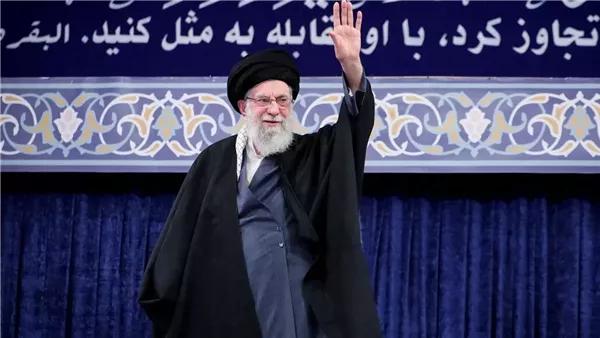
Ali Khamenei was on the verge of his eighty-seventh year (born on April 16, 1939) when he was killed in the first American-Israeli strike on Iran, marking the end of decades of the rule of the second guide in Iran, whom the younger generations have not known as a leader since he came to the position after the death of Khomeini, the first guide of Iran, after the overthrow of the Shah’s regime in the wake of the revolution he led from abroad, after which he returned and imposed on Iran one of the most reactionary regimes in modern political history, ruling on the rule of the jurist. Doctrinal perceptions and religious interpretations derived from Twelver Shiite jurisprudence.
Khamenei was one of the most influential men in the history of the Middle East in the era of post-colonialism and new regimes. The man was not concerned with the internal issues of Iran, which he ruled with security institutions that were similar to those under which the Shah ruled for many years. His primary interest was to export the revolution abroad, expand the circle of influence to countries abroad from Lebanon and Syria to Bahrain and Yemen, and subject Arab capitals to his direct authorities, controlling their political decisions.
But after the American strike that eliminated the Iranian leader, Tehran began an attack, the most violent in the history of the region, against American bases and interests in the Gulf states, from Saudi Arabia and Bahrain to the Emirates, Kuwait, and even the country closest to it, “the Sultanate of Oman.”
It seemed clear that Iran had prepared these plans in advance and identified the targets that it would attack if the United States and Iran proceeded to target the Supreme Leader in Iran, which was always described as the red line that would open the gates of hell on Israel and the United States, and Iranian officials are still talking about that the response has not yet come.
In the 12-day war, Khamenei was present in the operations room and even determined the goals according to what he later revealed.
The plan after the assassination of Khamenei
Days before the recent Iran-Israel war, the New York Times quoted 6 high-ranking Iranian officials, one of whom was affiliated with the office of Supreme Leader Khamenei; And 3 members of the Revolutionary Guard; And former Iranian diplomats said that Khamenei issued directives to his inner circle regarding the mechanism of state administration in the event that he was subjected to an assassination during any possible attack from the United States or Israel.
She added that Khamenei instructed Larijani and a narrow circle of political and military officials to ensure the continuity of the regime in the event that Iran was subjected to military attacks or the senior leadership was targeted, including Khamenei himself.
Khamenei requested that four replacements be identified for each leadership position, and he also granted broader powers to his close circle to enable them to make decisive decisions in the event that contact with him is lost or he is killed.
In the penultimate war, he chose 3 senior clerics as candidates to succeed him if he was killed.