

Tuesday 17/March/2026 – 04:16 AM
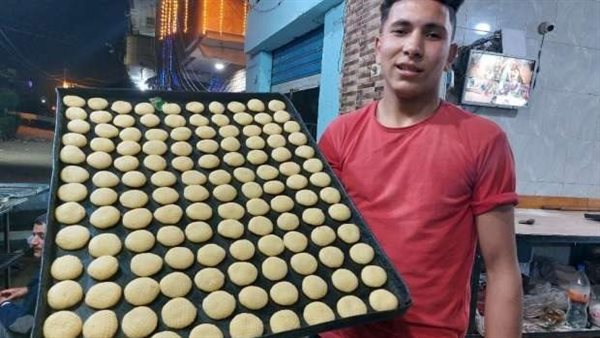
A few days before Eid Mushrooms Al Mubarak, the streets of Al Mahrousa are filled with the distinctive smell of cakes that announce the start of one of the most important commercial and social seasons in Egypt, as the Eid bakery industry is no longer just a dessert that adorns family tables, but rather has turned into a real compass that measures the street’s economic pulse and purchasing power in mid-March of 2026.
As the countdown to the awaited occasion begins, local markets are witnessing widespread mobilization to meet the increasing demand, amidst a remarkable price diversity that satisfies all classes. This custom is rooted in the depths of history, telling the story of a heritage steadfastness that began from the temples of the Pharaohs and flourished in the palaces of the Fatimids, all the way to the luxury showcases and consumer complexes of today, to paint an integrated picture that combines the nobility of the past with the challenges of the financial present.

Prices of Eid al-Fitr cakes and biscuits
Days before the blessed Eid al-Fitr, the Ministry of Supply and Internal Trade plays a pivotal role in offering Eid baked goods at reduced prices of up to 35% compared to foreign markets, through subsidiaries of the Holding for Food Industries, where the price of a kilo of plain cakes made with premium vegetable ghee reached 170 pounds, milk cakes ranged between 160 and 175 pounds as the most competitive price, and cakes with nuts reached 235 pounds.
While the price of cakes made with pure local ghee reached 250 pounds, and with added nuts, 300 pounds as a luxury category, as for ammonia and orange biscuits packed automatically, it recorded 170 pounds, plain shortbread 180 pounds, almond shortbread 210 pounds for economical gifts, regular petit fours 190 pounds, and lox sablet 220 pounds.
The Ministry offers mixed packages starting at 175 pounds per kilo, and reaching 810 pounds for a 4.5 kilo package.
Retail sector and major commercial chains
Commercial chains represent the main driver of the market and rely on numerical division. One of the most famous major chains offers a small box of plain cakes for 150 pounds, a kilo for 290 pounds, malban and ajamiya cakes for 345 pounds, walnut cakes between 445 and 490 pounds, and pistachio malban cakes for 535 pounds.
Its biscuits range from 290 to 320 pounds, the hand-decorated petit fours with nuts cost 475 pounds, and the almond shortbread costs 530 pounds, with mixed boxes available, prices ranging from 560 pounds for 1.5 kilos, up to 3,000 pounds for 6 kilos.
On the other hand, some competing chains are characterized by providing luxurious packaging, and their prices for the plain type are similar to the previous one, but the problem is that the small package in the VIP category reaches 1,500 pounds, and the large one reaches 2,250 pounds, while the innovative luxury gift category reaches 4,600 pounds.
Geographic variation and production economics 2026
Prices vary geographically in relation to operating costs. In municipal bakeries in some popular areas, the price of cakes and biscuits starts at 150 pounds.

In Menoufia Governorate, the prices of cakes range between 180 and 220 pounds, while in Fayoum, plain cakes are 280 pounds, and cakes with nuts are 420 pounds.
Despite this spread, the countryside maintains the custom of collective home baking at a cost of approximately 200 to 220 pounds per kilogram. Due to the high prices of local ghee, which raises the cost by more than 150 percent compared to vegetable ghee.
Historical anthropology in the Egyptian conscience for Eid cake
It is not possible to understand the true value of the holiday sweets industry without returning to its original source, as archaeological studies indicate that cakes are a Pharaonic invention par excellence that was associated with religious funerary rituals and the worship of the god Ra, and therefore took a circular shape as a symbol of the sun. Likewise, inscriptions from the Tomb of Ti from the Fifth Dynasty show amazing details of the manufacturing processes, as women carried baskets as offerings.

In the tomb of Minister Rakhmi-Ra in Luxor, we find documentation of the royal bakers mixing flour with ghee and honey, and shaping it manually into more than a hundred geometric and floral shapes to distribute it on national holidays and when the sun was perpendicular to the king’s chamber, and placing it with the dead in their graves.

With the advent of Islam, the Egyptians gave an Islamic character to this custom. In the Tulunid era, sweets were officially distributed, and in the Ikhshidid era, the minister Abu Bakr Muhammad bin Ali Al-Madrani created cakes stuffed with golden dinars and called them Aftan, meaning pay attention to the surprise inside, which was later popularly corrupted into the word Antonla.

The Fatimid era witnessed a real institutionalization of this industry through the establishment of Dar al-Fitra next to the shrine of Imam Hussein, with a budget amounting to 20 thousand golden dinars, where work began in the middle of Rajab, and the Caliph personally supervised tables up to 1,000 meters long. Despite Saladin al-Ayyubi’s attempt to abolish these aspects later, the people resisted popularly and adhered to their custom, to be recognized again in the Mamluk era, which witnessed the establishment of the Halawiyyin market in Bab Zuwayla and the emergence of endowments dedicated to distributing Soft and rough cakes for orphans in the last ten days of Ramadan.