


Sunday 29/March/2026 – 09:18 PM
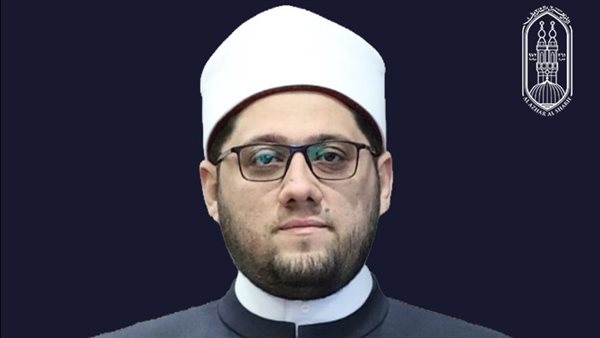
Al-Azhar Al-Sharif continues its awareness-raising efforts within its intellectual awareness campaign, as Dr. Moaz Shalabi, a faculty member at the Faculty of Da’wah at Al-Azhar University, and a member of the Al-Azhar International Center for Electronic Fatwa, responded to a suspicion raised by some about being satisfied with the Holy Qur’an rather than the Sunnah of the Prophet, and the claim that the Qur’an did not explain some rituals in detail due to a lack of explanation, while limiting the need for the Sunnah to prayer and zakat only.
Dr. Moaz Shalabi stressed that these proposals are characterized by a clear contradiction, as they combine the claim of the sufficiency of the Qur’an in explaining religion in its entirety, and the claim that it is unable to detail some rituals, which is considered a scientific and logical defect, in addition to being a violation of the legal texts.
A faculty member at Al-Azhar University refutes the suspicion of being satisfied with the Qur’an and denying the authenticity of the Sunnah
A faculty member at Al-Azhar University explained that saying that the Qur’an is sufficient with the exception of prayer and zakat only is considered uncontrolled selectivity, pointing out that the Sunnah of the Prophet was transmitted to us with the same method of transmission with which the Holy Qur’an was transmitted, and through the same companions and narrators, which confirms the unity of the source in reception.
A member of the Al-Azhar International Center for Electronic Fatwa pointed out that the Prophetic Sunnah did not come as a substitute for the Qur’an, but rather came as an explanation of it and explained its entirety, citing as evidence the words of God Almighty: {And We have sent down to you the Remembrance so that you may make clear to the people what has been sent down to them}, stressing that the statement of the Prophet, peace and blessings of God be upon him, is part of the revelation, due to the Almighty’s saying: {And he does not speak out of inclination. Indeed, it is only a revelation revealed}.
Dr. Moaz Shalabi explained that the Qur’anic texts affirmed the necessity of independent obedience to the Messenger, peace and blessings of God be upon him, as in the Almighty’s saying: {And obey God and obey the Messenger}, and His saying: {And whatever the Messenger gives you, take it, and whatever he forbids you, abstain from it}, which indicates the authority of the Sunnah in all areas of legislation, and not in some acts of worship but not others.
A member of the Al-Azhar International Center for Electronic Fatwa added that the lack of detail in some rulings in the Qur’an does not mean an inability to explain, but rather it is part of the legislative system that required the Prophet, peace and blessings be upon him, to explain them practically and verbally, likening this to the role of the teacher who explains the curriculum, without this meaning a deficiency in the origin of the book.
A faculty member at the College of Da’wah also warned of the seriousness of these suspicions, due to the doctrinal and societal implications they carry, stressing that challenging the Sunnah ultimately leads to questioning all sources of legislation.
A member of the Al-Azhar International Center for Electronic Fatwa stressed that the Prophetic Sunnah represents the practical application of the Holy Qur’an, and that denying it destroys an authentic aspect of the religion, stressing that God Almighty’s preservation of His Book includes preserving its statement, in confirmation of His Almighty’s saying: {Indeed, it is We who have sent down the Reminder, and indeed, we will preserve it}.
The “Awareness” campaign comes within the framework of Al-Azhar Al-Sharif’s ongoing efforts to correct misconceptions and confront intellectual suspicions, through a sober scientific discourse that combines legal evidence and rational analysis.