

Monday 23/March/2026 – 02:29 AM
St. Catherine is considered one of the most prominent religious and historical cities in Egypt, due to its great spiritual status, as it is full of many stories, including historical facts and circulated ones that are not based on evidence.
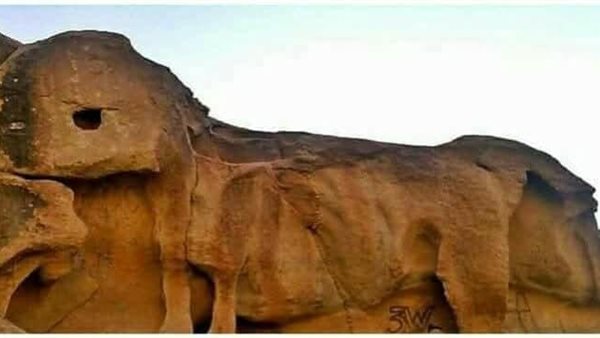
Among these stories is what is being raised about one of the rock formations in the Wadi Al Raha area, which some believe resembles a cow, linked to the story of the worship of the Children of Israel.
In this context, Hossam Sobhi, Director of St. Catherine’s Antiquities, explained in statements to Cairo 24 that what is being circulated regarding this rock formation is not based on any reliable scientific or religious evidence, stressing that it is merely a popular interpretation with no basis in truth.
He pointed out that the religious story relates to the “golden calf” that the Samaritan made during the absence of God’s Prophet Moses, peace be upon him, to receive the tablets of the Sharia.
It is mentioned in the Holy Qur’an, in Surah Taha (verse 97): “And look at your God, upon whom you have remained devoted. We will certainly burn him, then We will certainly scatter him in the sea.”
The verse explains that the calf was burned and then blown up in “Al-Yam,” meaning the sea, which indicates that the location of the incident was linked to a water area, and not to inland mountain formations such as the area of St. Catherine.
He also added that the stories confirm that the Samaritan made the calf from the gold collected by the Children of Israel, and there is no connection between this story and the natural rock formations that currently exist.
He concluded that the rock formation in Wadi Al Raha is only a natural phenomenon resulting from erosion factors over thousands of years, and is not linked to any religious or historical events.