

Thursday 05/February/2026 – 11:33 PM
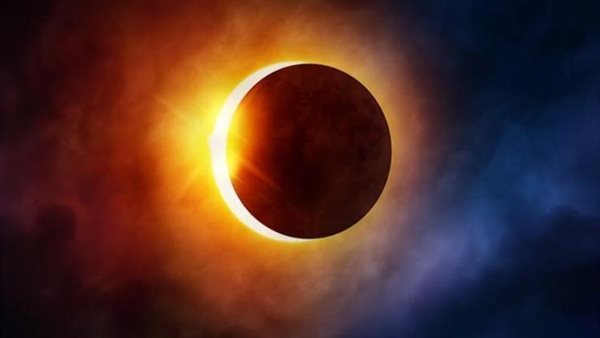
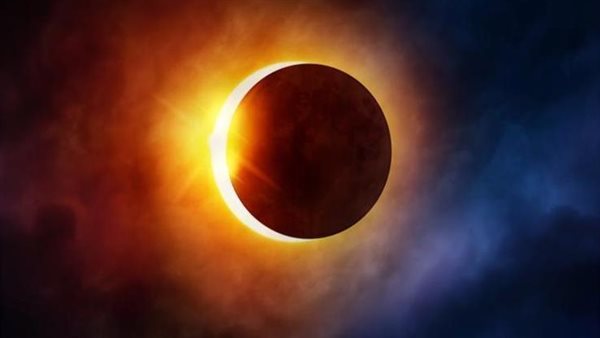
The National Institute for Astronomical and Geophysical Research revealed in a statement that an annular solar eclipse will occur at the end of the month of Shaban, and the timing of its middle coincides with the conjunction of the month of Ramadan for the year 1447 AH, on Tuesday, February 17, 2026 AD.
An annular solar eclipse coincides with the conjunction of the month of Ramadan 1447 AH
He added that the eclipse is seen as an annular eclipse in Antarctica, and can be seen as a partial eclipse in southern Africa in Mozambique, southern South America in Chile and Argentina, the Pacific Ocean, the Atlantic Ocean, the Indian Ocean, and Antarctica.
He explained that this annular eclipse covers an area 615.2 km wide, and the eclipse in its form as an annular eclipse will last for 2 minutes and 19.6 seconds, and at the peak of the annular eclipse the disk of the moon covers about 96.3% of the entire disk of the sun.
He pointed out that the eclipse will take approximately four hours and thirty-one minutes from its beginning to its end, pointing out that this eclipse cannot be seen in Egypt.
He added that the next annular solar eclipse will occur on February 4, 2027.
He explained that an annular eclipse is a type of solar eclipse that usually occurs when the Moon, during its monthly cycle around the Earth, is in the waning phase at the end of the lunar month, and immediately before the birth of the new crescent, as the Moon is located between the Earth and the Sun on the line of conjunction, which is the line connecting the centers of the Earth and the Sun or close to it, and in its presence on one of the ascending or descending nodes or close to them.
He explained that in these cases the distance between the Moon and the Earth changes between 405,000 km and 363,000 km, and as a result of this change in distance, the size of the Moon changes in appearance to us. When it is close, its size is large and covers the entire disk of the sun, causing a total eclipse. When it is far away and coincides with its presence between the Earth and the sun, its size becomes smaller and is smaller than the disk of the sun, so it does not cover it completely, but at the moment of the peak of the eclipse, the light of the sun surrounds the shadow of the moon, so a ring of sunlight appears to us, and it is called an annular eclipse.
He explained that the phenomenon of the solar eclipse is useful in confirming the beginning of the Hijri (lunar) months, as the solar eclipse occurs in conjunction or conjunction, meaning that the occurrence of the solar eclipse indicates the nearness of the birth of the new crescent, and the center of the eclipse is considered the date of the birth of the new moon.