

Saturday 14/March/2026 – 01:49 AM
Al-Azhar Mosque organized a scientific forum after Tarawih prayers entitled “The Islamic Scientific Heritage and Its Impact on Modern Western Civilization,” with the participation of a number of Al-Azhar University scholars, in the presence of an elite group of scholars, specialists, science students, and crowds of worshipers.
The impact of the Islamic scientific heritage on the renaissance of Western civilization during a scientific forum after Tarawih
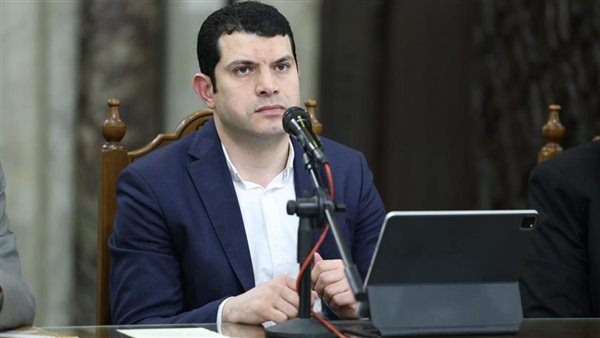
Professor Dr. Mahmoud Siddiq, Vice President of Al-Azhar University for Postgraduate Studies and Research, and Professor Dr. Muhammad Abdel Hafeez, Professor in the Department of Civilization and History at the Faculty of Arabic Language at Al-Azhar University, participated in the forum. The meeting was moderated by Muhammad Al-Desti, member of the Media Center at Al-Azhar Sheikhdom.
In his opening speech, Muhammad Al-Desti stressed that the forum aims to shed light on the prominent role of the Islamic scientific heritage in the renaissance of Western civilization, explaining that these scientific activities reflect the importance of evoking Islamic history and highlighting the contributions of Muslim scholars to the progress of human civilization.
For his part, Dr. Mahmoud Siddiq explained that Europe in the Middle Ages lived through long periods of scientific and cognitive decline, before it benefited from the sciences and knowledge transmitted by Muslims, pointing out that Islamic civilization made great contributions in the fields of medicine, astronomy, engineering, and other sciences that later formed the basis of the European Renaissance.
He added that the transfer of the Islamic scientific heritage to Europe took place through the translation and copying of scientific books, in addition to cultural and knowledge exchange between civilizations, which contributed to the formation of an important knowledge base that paved the way for the launch of the European Renaissance beginning in the fifteenth century and beyond.
In turn, Dr. Muhammad Abdel Hafeez emphasized that the transmission of Islamic civilization to Europe took place through three main paths: Andalusia, where Islamic civilization continued for nearly eight centuries, and the island of Sicily, which witnessed extensive scientific and cultural interactions, in addition to the Crusades, which extended for about two centuries, during which many Islamic manuscripts and knowledge were transferred to Europe.
Abdel Hafeez pointed out that Andalusian society witnessed a wide spread of science and knowledge, at a time when the illiteracy rate in Europe was high, explaining that many of the sciences and arts that flourished in Europe later, such as medicine, astronomy, engineering, and philosophy, were directly influenced by the scientific heritage of Islamic civilization.
During the month of Ramadan, Al-Azhar Mosque continues to implement an integrated scientific and advocacy program, which includes scientific lessons, intellectual forums, and awareness lectures presented by an elite group of senior scholars and professors from Al-Azhar University, as part of Al-Azhar Al-Sharif’s efforts to spread correct religious awareness and promote moral values in society.