

Thursday 02/April/2026 – 08:28 PM
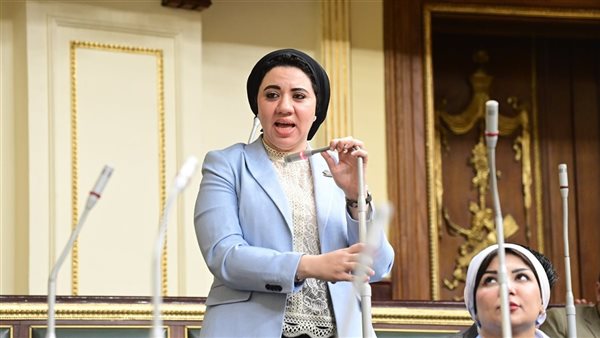
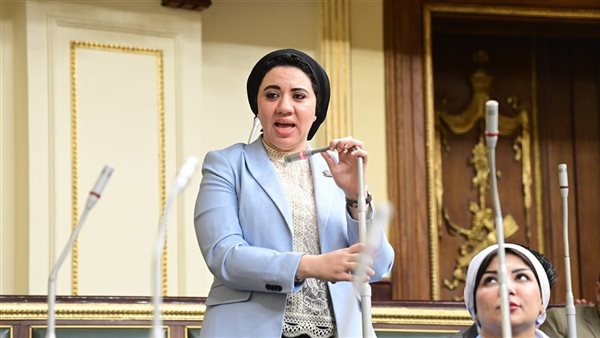
Representative Amira Saber Kandil, a member of the Senate and Vice-President of the Egyptian Social Democratic Party, submitted a proposal to the Speaker of the Council, Counselor Essam El-Din Farid, addressed to the Minister of Education and Technical Education, regarding strengthening mechanisms to protect students from attacks in educational institutions.
A parliamentary proposal regarding strengthening mechanisms to protect students from attacks within educational institutions
The explanatory memorandum for the proposal stated: In light of the repeated incidents of attacks on children in educational institutions, and in the belief that child protection is a societal responsibility and a constitutional duty, Article 80 of the Constitution stipulates that anyone who has not reached eighteen years of age shall be considered a child… The state is committed to caring for the child and protecting him from all forms of violence, abuse, mistreatment, and sexual and commercial exploitation.
Article 19 also affirms that “education is a right for every citizen,” which requires providing a safe educational environment. Egypt, as a signatory to the Convention on the Rights of the Child since 1990, is internationally committed to ensuring the protection of children from all forms of violence and exploitation.
She adds: We appreciate the efforts made by the political leadership, the Egyptian government, and the Public Prosecution in dealing quickly and decisively with the incidents of recent attacks, as the state has shown a clear commitment and high transparency to holding the aggressors accountable and protecting the victims. However, the optimal response to this phenomenon should not be limited to reactions after the incidents occur. We need to benefit from this momentum and take proactive steps to prevent attacks from occurring in the first place, by building a comprehensive protection system that prevents the recurrence of these crimes. We have decided not to comment quickly on these events before conducting a study. Comprehensive of what developed countries are doing in this field.
She continues: International experiences show that preventing attacks requires a comprehensive approach that combines security screening, specialized training, and community awareness. In the United States, most states require those working with children to complete annual mandatory training on recognizing and reporting signs of abuse. In the United Kingdom, all school staff, including volunteers and bus drivers, undergo an Enhanced DBS Check before being hired. Australia and Canada also have similar systems in place that include national databases of those banned from working with children.
We would like to propose the following to the relevant ministry:
First: Requiring all employees in educational institutions to complete at least two hours of training on recognizing signs of abuse and immediately reporting it. This includes teachers, administrators, bus drivers, cleaners, security workers, and volunteers. This training is renewed every three years and covers recognition of methods of seduction and psychological manipulation, mandatory reporting protocols, and legal immunity for whistleblowers in good faith. We suggest that the Professional Academy for Teachers, in cooperation with the National Council for Childhood and Motherhood, develop the training content, while drawing on the expertise of UNICEF and the World Health Organization in this field. A public tender can be issued for training trainers through Egyptian universities and specialized research centers such as the National Center for Social and Criminological Research. Training can be electronically via the Ministry’s digital platform to save costs and facilitate access, with certificates issued that are recorded in the employee’s file.
Second: A certified protection officer is appointed in each school from among the social or psychological workers already present, who receives five days of advanced training at the hands of specialists from one of the relevant colleges.
The rule also applies that an adult should not remain alone with a child in a closed place without supervision or that there is a glass window in the door that allows visual surveillance. Surveillance cameras are installed in the corridors and courtyards and not in the classrooms or bathrooms to ensure privacy with protection.
Third: Develop awareness programs for children and parents through age-appropriate educational curricula that teach children their rights, body safety, the distinction between safe and unsafe touching, and how to report any disturbance. We propose that the Curriculum and Educational Materials Development Center, in cooperation with the National Council for Childhood and Motherhood, undertake the development of integrated content within a new curriculum for family and health education and the subject of values and respect for others.
Proven international programs such as the American “Erin” program or “Speak Up by Safe” can be used and adapted to the Egyptian cultural context. Periodic workshops are organized for parents through the boards of trustees, parents and teachers in each school, at least two workshops per year, on warning signs of abuse and how to communicate with their children.
These proposals can be implemented immediately, as schools have social workers who can be trained as protection officers, educational digital platforms exist and can be employed, and the financial cost is limited and can be funded from the budget of current training programs or through partnerships with UN agencies and international organizations interested in child protection that have expressed their willingness to support such initiatives.
This system achieves a clear public interest in protecting our children from harm, restoring families’ confidence in educational institutions, and alleviating the psychological and social burdens resulting from attacks.
It also protects honest workers in the education sector from false accusations by providing a transparent and safe environment for everyone. Investing in prevention today saves huge costs in psychological, judicial and social treatment in the future and builds a confident and protected generation.