
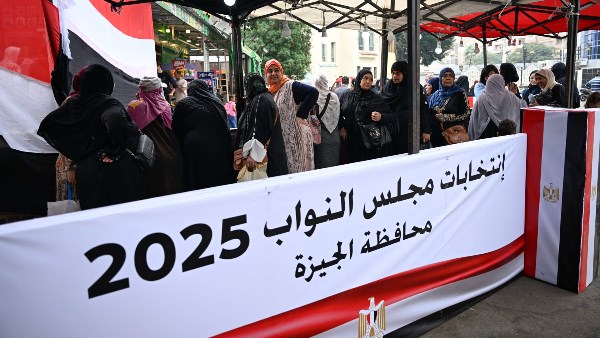
The Egyptian Coalition for Human Rights and Development issued its final statement regarding the follow-up of the events of the first election day of the runoff round for the first phase of the 2025 House of Representatives elections, following the closure of polling stations in the twenty constituencies that witnessed the re-voting.
The coalition explained that, throughout the first election day, the Central Operations Room received a series of reports from governorate coordinators, reflecting the most prominent developments and observations up to the moment of closure.
First: Developments in demand up to the moment of closing
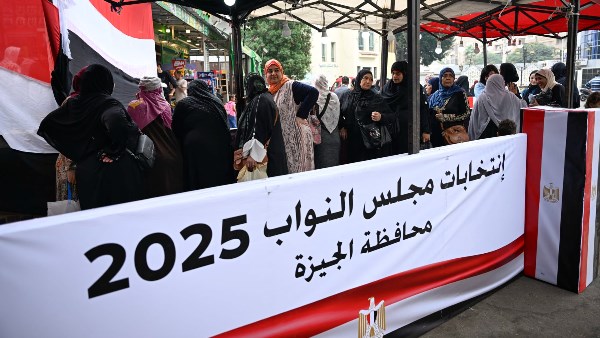
Village committees in Qena, Sohag, and Beheira governorates witnessed a noticeable increase in turnout rates during the last hours compared to the morning period. The field teams in the operations room reported the following:
- In Sohag: Follow-up to Committee No. (64) at the New Al-Sawalem Primary School.
- In Qena: Follow-up to Committee No. (43) at the Martyr Muhammad Sayyid Hammam Preparatory School in Al-Jazeera.
- In Al-Buhaira: Noticeable activity was observed in Committee No. (25) at Muhammad Abdel Hakim Ammar Primary School.
There was significant female participation in a number of Qena committees, especially Committee No. (9) at Khaled Bin Al-Walid Primary School, where special queues for female voters appeared in rural centers.
- In Fayoum, committees recorded stable attendance throughout the day with a gradual increase before closing, most notably committees No. (82) at Fayoum Girls’ Secondary School, and No. (26) at Manshaet Kamal Primary School.
- As for Alexandria and Giza, an increase in youth participation was observed during the last hour, especially in highly competitive committees, including:
Committee No. (16) at Al-Jihad Joint Primary School in Giza,
Committee No. (147) at Al-Muhajireen Primary School in Alexandria.
Second: Notes on the progress of the operation in the last hours
The coalition recorded a noticeable improvement in the performance of a number of committees that witnessed administrative slowdowns in the morning, especially in Sohag and Fayoum.
Follow-up teams observed limited crowding in a number of village committees in the last hour, and it was controlled by organizing entry movement and preventing crowding in front of doors.
A clear response was observed from the administrative staff to the high turnout, which contributed to facilitating the voting process.
Some committees benefited from the decision of the National Elections Authority to grant judges an hour of rest, but this did not appear to have any impact on the regularity of work within the committees.
Third: prominent humanitarian and logistical positions
The coalition documented a prominent humanitarian situation by security forces in Imbaba, Giza, where police officers helped an elderly voter enter the polling station to cast his vote.
In the Beheira and Fayoum committees, it was noted that additional seats were provided for the elderly during peak periods, in addition to allocating corridors for people of determination.
In Qena, female administration employees guided female voters within dense committees, which contributed to maintaining organizational liquidity.
Fourth: Violations that were monitored until closure
The coalition noted that it had monitored a number of limited violations that did not affect the integrity of the electoral process, including:
- Direct electoral propaganda attempts near some committees in Qena and Beheira, which were dealt with immediately.
- Individual complaints about attempts to verbally direct voters to a limited extent in Sohag.
- Illegal electoral banners appeared near some headquarters in Al-Buhaira, and they were removed by the competent authorities.
- Limited crowding before the closure in some of the busiest village committees.
The coalition confirmed that the recorded violations were within a limited scope and did not affect the integrity of the process.
Fifth: General evaluation of voting day
The follow-up teams concluded that the voting day was characterized by:
- General calm within the committees throughout the day.
- A gradual increase in demand by the end of the day,
- Significant women and youth participation in several governorates,
- A clear administrative and organizational improvement in recent hours.
- Speed of dealing with field notes.
The Egyptian Coalition for Human Rights and Development confirmed that the election day passed in an orderly and stable manner, without recording any serious violations that would affect the integrity or safety of the electoral process.