
Samsung introduced the Privacy Display feature for the first time with the Galaxy S26 Ultra phone, as it emerged as the most important addition in the flagship version thanks to its ability to hide the screen or sensitive content from the eyes of those around it through integration between hardware and software.
Less than a month after the launch, the company demonstrated during the MWC exhibition an advanced version of the feature that can be considered its second generation.
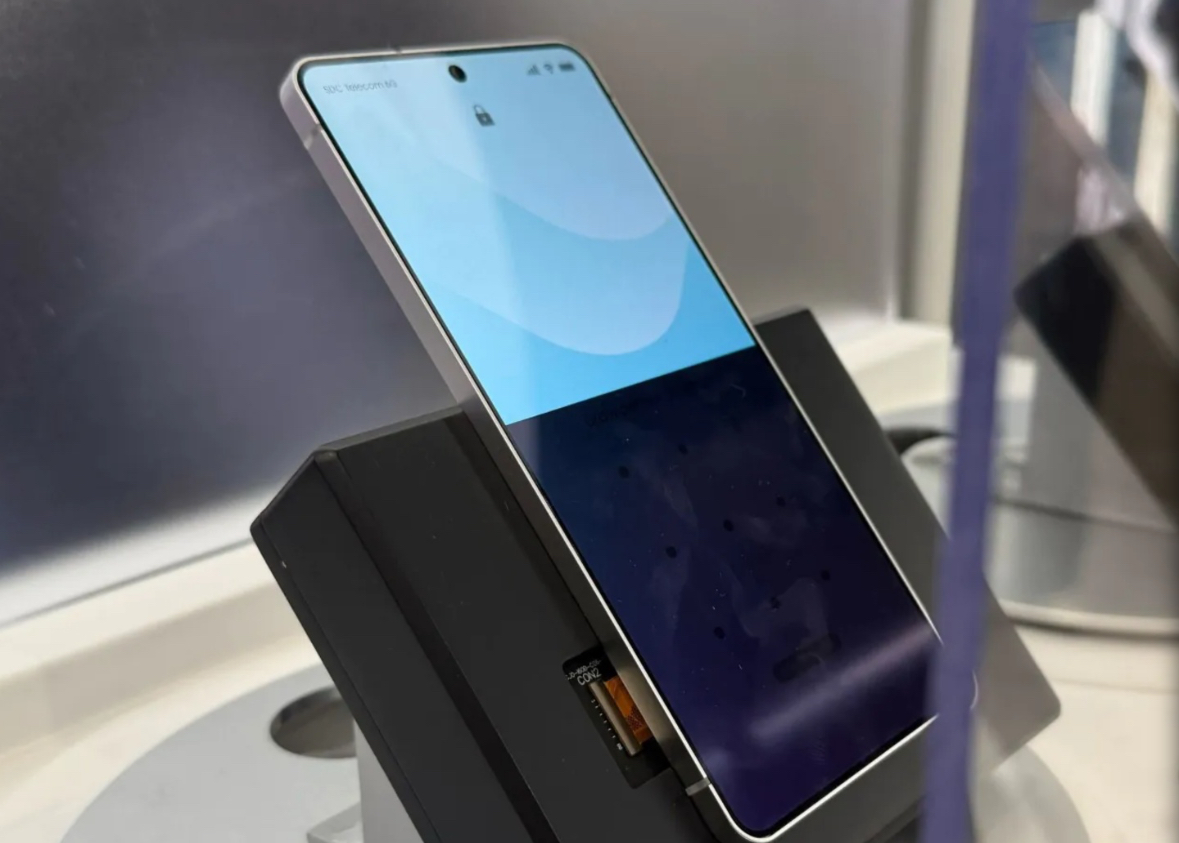
The experimental models that were displayed showed devices that appear identical to the design of the Galaxy S26 Ultra, but with clear improvements in the concealment mechanism.
In addition to the ability to completely block the screen or hide sensitive elements such as passwords and notifications, it is now possible to customize a large part of the screen to remain hidden, while the other part continues to display normally.
The circulated images revealed that one of the devices hid approximately half of the screen, while another device hid approximately a third of it, which reflects greater flexibility in controlling the hiding area.

However, Samsung has clarified that these improvements require new hardware, and therefore will not arrive in the Galaxy S26 Ultra via a software update.
On the other hand, one of the executives hinted at the possibility of providing the Galaxy S27 Ultra with the advanced version of Privacy Display, which could give the series a real boost after a period of relatively limited updates.
Recent reports indicate that Samsung is testing batteries with silicon-carbon technology in preparation for their adoption in the Galaxy S27 series, in addition to expected fundamental improvements in the cameras.
Moreover, other reports stated that the company is gradually moving to expand the use of Exynos processors in its devices, which may be reflected in the Galaxy S27 lineup in the future, although no clear timetable has been set for this.