
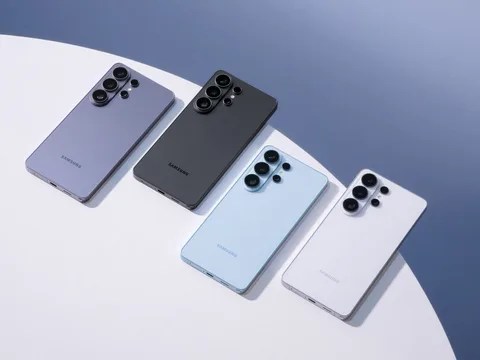
Detailed analyzes in evaluating the cameras showed that the Galaxy S26 Ultra phone from Samsung achieved better performance than its previous version, and despite this noticeable improvement, Samsung is still unable to keep up with the best competitors in the market. Even relatively older phones, such as Apple’s iPhone 16 Pro Max, were able to achieve higher results and surpass Samsung’s latest leading versions in the global evaluations list.
The official results of the tests revealed that the camera system rating in the new phone increased to 157 points, compared to 151 points achieved by the Galaxy S25 Ultra last year. This improvement was not enough to occupy the top positions, as the phone was satisfied with the eighteenth place in the overall ranking, lagging behind prominent phones such as the iPhone 16 Pro Max, which scored 161 points, and the Pixel 10 Pro XL phone from Google with a score of 163 points, while the Bora 80 Ultra phone from Huawei topped the list with 175 points.
This moderate improvement is not surprising to followers, as the company kept the same 50-megapixel ultra-wide-angle camera and f/1.9 lens aperture, along with the 10-megapixel telephoto camera and f/2.4 lens aperture without any change from the previous generation. On the other hand, the 200-megapixel main camera got a faster lens with an f/1.4 aperture instead of f/1.7, while the 50-megapixel telephoto camera was upgraded to have an f/2.9 lens aperture instead of f/3.4 to enhance its capabilities.

These engineering modifications caused the minimum focus distance to double, so that the camera was only able to focus on objects from a distance of 52 centimeters. Despite this, the flagship phone succeeded in scoring multiple positive points during the analysis thanks to the often accurate white balance, the wide dynamic range that highlights details, in addition to the very effective video stabilization system, and its excellent ability to capture close-up macro images with precise and dazzling details for users.
The downside The main camera and periscope telephoto camera showed less noise thanks to the faster lenses, but visible noise was still an obvious issue in low-light conditions. The platform’s experts criticized the auto-exposure feature not working reliably in all circumstances, specifically in photos of people, where faces are recorded with relatively few fine details, while the auto-focus system sometimes faces difficulties in properly focusing on people’s eyes to ensure image sharpness.