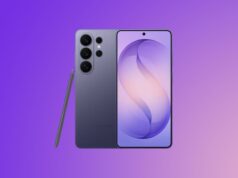

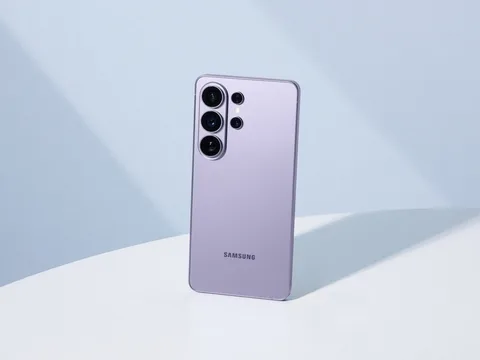
Samsung revealed exciting new technical details about its flagship Galaxy S26 Ultra phone, highlighting features dedicated to professional content makers. Samsung explained in its official publication issued on March 23 that this mighty phone is the first smart device that supports Advanced Professional Video encoding, known as APV, to provide exceptional quality. This professional encoding was developed in close cooperation with Qualcomm to advance visual production workflows via mobile devices to unprecedented levels.
This innovative encoding is distinguished by its superior ability to preserve precise visual information during filming and editing operations compared to traditional encodings widespread in smartphones. The company compares the APV codec with the popular HEVC codec to confirm that strong compression in the latter may lead to blurring fine details such as textures, water droplets, and movement after repeated encoding, while the new codec is designed to hold up better during subsequent production stages and supports recording 8K video clips at a rate of 30 frames per second.

Developers’ technical documentation indicates that this smart encoding consumes up to 10% less storage space than competing formats while maintaining the same high visual quality. The smartphone supports APV 422 HQ profiles to ensure the highest possible quality images are captured, and APV 422 LQ profiles for lighter, easier-to-handle files. This advanced recording can be used with both internal and external storage units provided there is at least 10 percent free space in the internal memory.
Users can easily activate this professional feature through the camera settings, choose the appropriate video format, then select the APV HDR option or the APV Log option to meet their technical needs. The management provides the feature of recording high-resolution footage and saving it directly to external storage units via the USB port to facilitate the data transfer process. This practical addition is considered extremely important for content creators who conduct long and complex filming sessions that require huge storage spaces and heavy workflows in editing and montage.
Through this step, Samsung seeks to attract users who are more interested in video workflows than prominent artificial intelligence features. These technical details come after Samsung recently announced support for the AirDrop feature via the Quick Share application to enhance compatibility. It is worth noting that Apple preceded its competitors by introducing its own ProRes codec many years ago to meet the requirements of professional photography. Despite this, Samsung did not make any direct comparisons between the two technologies in its official documents.