

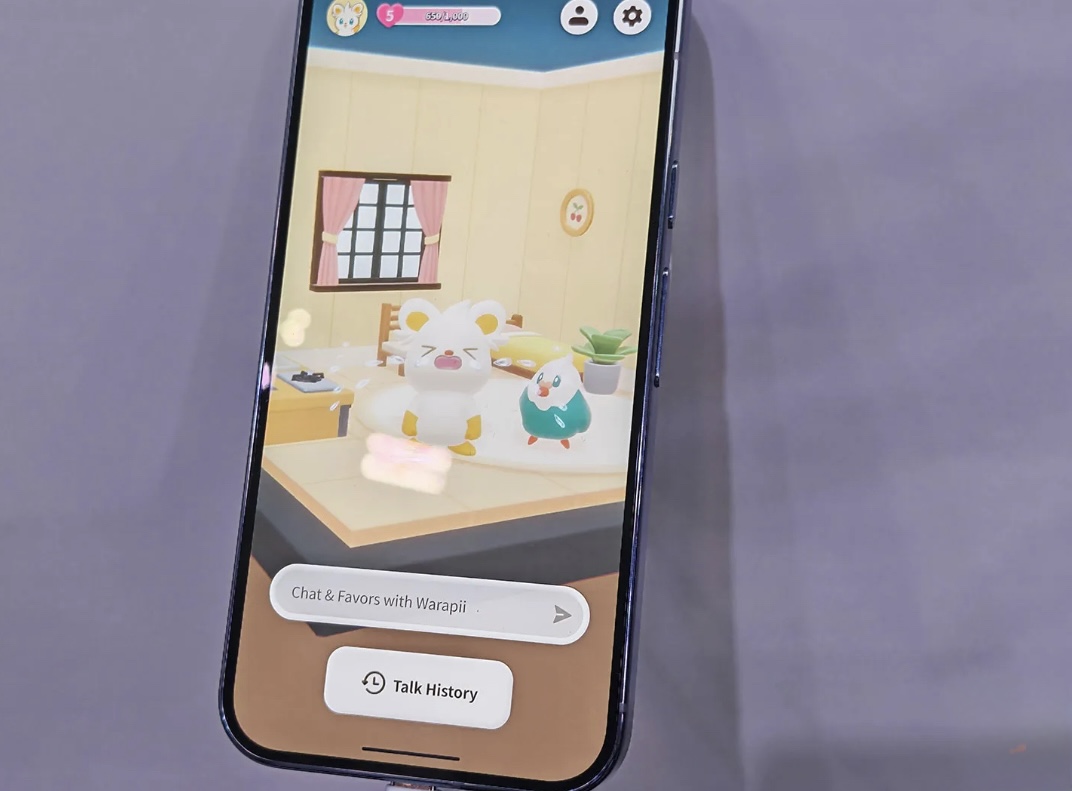
At #MWC2026, NTT Docomo showcased its personal AI assistant SyncMe, designed to learn from user habits and proactively suggest information or actions.
This digital assistant acts as a permanent companion linked to the user’s Docomo account and its daily data signals.
Unlike traditional assistants that rely heavily on commands, SyncMe aims to anticipate the user’s needs and offer recommendations before they ask for them.
The system works via a smartphone app, using a combination of behavioral signals, user inputs and contextual data to understand their preferences over time.

During a demo at the NTT booth, the team demonstrated that SyncMe can create a user profile by linking it to their Docomo account history, including long-form usage data, payments, and location patterns.
Since many Japanese users keep the same account for years, the system can utilize this data to infer interests and daily routines.
The system also allows the input of short-term contextual cues, including images. For example, if an agent receives several images of museums, it may conclude that the user is interested in visiting museums and provide appropriate recommendations. The goal is to provide proactive suggestions rather than simple responses to inquiries.
Illustrative scenarios included suggesting exhibitions when traveling to a new city or offering activities that match the user’s interests, such as recommending attending a Los Angeles Lakers game if the user showed an interest in basketball and was in the city.
Docomo also introduced SyncMe as a platform for multiple AI agents, where each user starts with a basic personal assistant, and additional specialized agents can be added depending on interests or services, such as travel, entertainment or business partnerships.
The system is based on a freemium model, where the basic agent is available for free to Docomo users, while premium features or partner integrations can be activated to unlock additional capabilities.
SyncMe is currently in beta in Japan, with plans to expand more widely over the coming months, targeting Docomo users first.
This concept reflects the industry’s trend towards AI assistants that work on behalf of users rather than simply answering queries, and represents an opportunity for telecom operators to build new services based on the huge contextual data available to them.