

Huawei has announced a new series of flagship phones in its latest attempt to use the latest specifications and cameras to attract customers to its Google services-free ecosystem.
The Huawei P40, P40 Pro, and P40 Pro Plus are packed with flagship features, including Huawei 5G Kirin 990 processors, up to four rear cameras, and up to 90Hz displays.
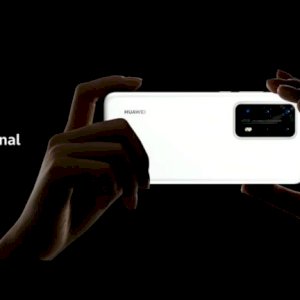
In a similar vein to Samsung’s latest S20 range, the biggest differentiating feature between the three devices is their cameras.
Huawei P40 phone
Starting with the base P40, you’ll find a triple rear camera setup consisting of a 50-megapixel primary camera with f/1.9 aperture, a 16-megapixel camera with f/2.2 aperture, and an 8-megapixel camera with f/2.4 aperture A telephoto camera with 3x optical zoom Like last year’s P30 Pro, which takes some of the best low-light photos around, Huawei is once again using a RYYB sensor. , which says it absorbs more light, resulting in better low-light performance.
The sensor is also huge at 1/1.28-inch, which is larger than the 1/1.33-inch 108-megapixel sensor found on the Galaxy S20 Ultra. This should help further with low-light performance. It produces 12.5-megapixel images by default by combining four pixels into a single image.
Huawei P40 Pro and P40 Pro plus
As for the P40 Pro, it comes with a ToF sensor and an increased resolution for two of the three cameras. The main camera is still 50 megapixels, but on the P40 Pro, the wide-angle camera has a resolution of 40 megapixels, and the telephoto lens is 12 megapixels. It also sees an increase in the zoom of the telephoto lens to 5x instead of 3x as on the P40.
The P40 PRO PLUS phone comes with two separate lenses for the magnifying glass
You’ll find two telephoto lenses: a periscope lens with a 10x zoom rate and one with a 3x zoom, and Huawei says this means you’ll get better images at both medium and long distances. Along with the telephoto cameras, both of which are 8MP, there is a 50MP primary camera and a 40MP ultra-wide camera. Naturally, there is a ToF sensor as in the P40 Pro.
Huawei has also made some improvements on the software side and says its AI is now smart enough to remove glass reflections from an image, and can also remove unwanted artifacts if you shoot something and it turns out wrong.
There’s also a feature that will suggest a better photo for you after you automatically take a series of photos in the background, similar to the “Top Shot” feature that Google first introduced on its Pixel 3.
The screen in Huawei P40 phones
The curved display comes on the P40 Pro and P40 Pro Plus, which Huawei boasts about not only on the left and right sides of the device but also on the top and bottom.
Also, the screen specifications in the two phones are OLED with a size of 6.58 inches, and although the P40 Pro and Pro Plus phones only go up to 90 Hz, not 120 Hz, the animation still feels very smooth and the resolution of the two phones is 2640 x 1200 in addition to infrared face unlock for dim light.
The P40 is standard in terms of design. It has a smaller 6.1-inch display that doesn’t wrap around the sides of the device, and a lower resolution at 2340 x 1080. There’s also no IR lock on this device, and the screen refresh rate is higher than 60Hz, meaning the Pro Plus won’t be quite as smooth.
Besides the previously mentioned biometric face unlock, all three phones also include in-display fingerprint sensors, which Huawei says are 30 percent larger this time and unlock 30 percent faster.
The processor in Huawei P40 phones
All three phones are powered by the same 5G Kirin 990 processor found in last year’s Mate 30, and Huawei has confirmed that there will be no 4G-only versions of the devices.
Huawei P40 phone battery
The Pro and Pro Plus include 4,200 mAh batteries that can charge at up to 40W, and the Pro Plus supports even that charging speed wirelessly using one of Huawei’s charging pads.
The regular P40 has a 3,800 mAh battery and a maximum charging speed of 22.5W using a cable.
Resistance to Huawei P40 phones
Water resistance also varies between the three phones, with the Pro and Pro Plus rated at IP68, while the P40 is IP53 (this basically means the Pro and Pro Plus should withstand being fully submerged in water, while the regular P40 is only designed to withstand light rain).
Colors in Huawei P40
Modern. Minimal. Elegant.
With nature as inspiration, the #HUAWEIP40 Series brings a new twist to classic hues. Which color will you choose? #VisionaryPhotography
Watch us LIVE now https://t.co/QdwooYadDM pic.twitter.com/uth2HkfO0z— Huawei Mobile (@HuaweiMobile) March 26, 2020
The full range will be available in white, black, blue, silver and gold, with the P40 Pro Plus also available in black or white ceramic finish.
Google services in Huawei P40
You won’t find any GOOGLE apps or services on the new HUAWEI phones of course and if you need to use Google apps they will provide you with solutions to provide an alternative to Google’s software.
Prices of new Huawei P40 phones
The price of the Huawei P40 phone is 799 euros
The price of the Huawei P40 Pro phone is 999 euros
The price of the Huawei P40 Pro Plus phone is 1,399 euros