

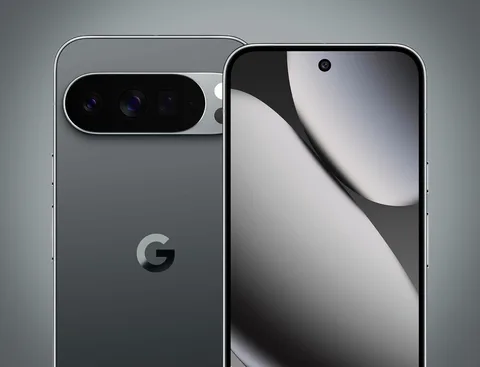
Months before the expected launch date of the Pixel 11 Pro XL phone, one of the accessories manufacturers included a protective cover for the expected flagship phone, providing the first hints about the expected changes in the design. After Google revealed the Pixel 10 Pro XL phone in August 2025, expectations are moving towards the launch of the Pixel 11 series during the third quarter of 2026 to continue the strong competition.
Although the official launch date is still several months away, ThinBorne, a company specialized in manufacturing accessories, was quick to include a protective cover specifically for the Pixel 11 Pro XL phone, which represents the highest version in the new series. This cover, made of aramid fiber, indicates a noticeable change in the design language, as the space allocated for the oval camera unit appears slightly narrower but longer compared to the previous version.
The leaks also show that the camera unit protrudes less than the external body of the phone, which means that Google is following a design strategy similar to the one it applied when moving from the Pixel 9a to the Pixel 10a. On the other hand, the dimensions of the protective cover indicate that the overall size of the new phone will not witness significant changes compared to the previous generation, maintaining the same familiar footprint for users.

Given that we are about six months away from the official announcement of Google’s flagship phone, these leaks must be treated with extreme caution. It is still not known yet whether the cover manufacturer has already obtained accurate and confirmed information about the final design of the upcoming phone, or whether this cover is just a preliminary design that was placed as a pocket item to test the market and attract early attention.
Previous leaks confirm that the new phone will receive an exciting upgrade represented by 3D facial recognition technology in a style that mimics Apple’s iPhone 17 phones. However, the phone will continue to rely on a screen with a small circular hole instead of a wide opening, as the company plans to hide the additional sensors needed for facial recognition, which is known as the Tuscany Project, directly under the screen out of sight.