
In recent hours, Banker has monitored a number of files on the local and international scene, which were published through its various platforms, the most prominent of which are: Details of Sisi’s surprise, bank operating hours during Ramadan, and good news from the IMF.
Starting with the banking sector, in which the Central Bank of Egypt announced the official working hours in banks during the holy month of Ramadan for the year 2026, and because the timings fit the nature of the holy month and its rituals, the new dates will remain as follows.
For employees, work will start from nine in the morning until two o’clock in the afternoon, and for the public and customers, the doors will be open from nine thirty in the morning until one and a half in the afternoon.
The Central Bank confirmed that this amendment aims to regulate working hours in a way that ensures the provision of banking services smoothly and easily, and at the same time takes into account the comfort of employees on fasting days.
We are still continuing with the news of the Central Bank of Egypt, which revealed a surge in its net foreign assets, which rose and reached five billion and 13 million dollars, equivalent to about 705 billion pounds at the end of January 2026. This is compared to 13.3 billion dollars at the end of December 2025, which was equivalent to approximately 634 billion pounds at the time.
In May 2024, the Central Bank revealed a historic shift in net foreign assets from a deficit to achieving a surplus for the first time since March 2022, and at that time it achieved a surplus equivalent to 458 billion pounds after there was a deficit reaching 36 billion pounds in April 2024.
These net foreign assets are considered one of the most important criteria for the stability and strength of the banking system because it explains the difference between the central bank’s assets and its liabilities in foreign currencies.
From the Central Bank, we go to the International Monetary Fund, which included the fifth and sixth reviews of the extended credit facility program for Egypt, along with the first review of the flexibility and sustainability program, on the agenda of the Board of Executive Directors meetings on February 25th. If the reviews are approved, Egypt’s countries will receive financing amounting to $2.7 billion.
On December 22, 2025, the Fund announced that its mission had reached an agreement with Egypt regarding these reviews within the extended financing program, which has a total value of 8 billion dollars, in addition to financing flexibility and sustainability, which is worth 1.3 billion dollars, and the Fund.
Last month, it also raised its forecast for the growth of the Egyptian economy for the second time in three months to reach 4.7%, and it is expected that growth will reach 5.4% by the year 2027. This is all supported by the continuation of economic reform programs and the strengthening of financial stability.
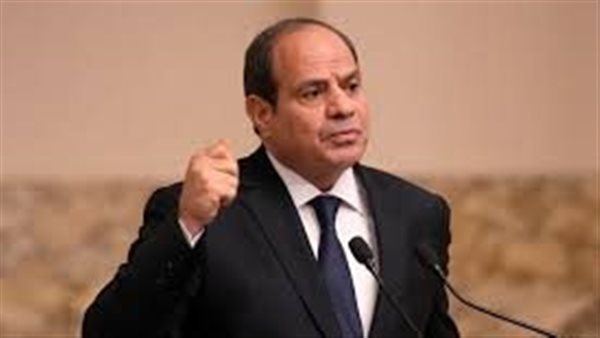
We conclude our tour with the Minister of Finance, Ahmed Kajouk, who today announced the start of implementation of the new social protection package that President Sisi directed before the month of Ramadan, to support the most vulnerable and the lowest-income groups, at a total cost of 40.3 billion pounds, in implementation of the mandates of the President of the Republic. The Minister explained in an official statement that this package includes direct cash support to eligible families to improve their living conditions on the occasion of the month of Ramadan and Eid al-Fitr.
He pointed out that there is additional cash support worth 400 pounds for ten million families with ration cards during the months of March and April 2026, at a cost of 8 billion pounds. This is in addition to another 400 pounds during Ramadan and Eid for about 5.2 million families who are beneficiaries of Solidarity and Karama, at a cost of 4 billion pounds, and support worth 300 pounds for child pension beneficiaries and rural women pioneers.
The minister also confirmed that there are 3 billion pounds to quickly complete the waiting lists for patients and critical cases, and 3 billion pounds to increase treatment allocations at state expense for low-income people in the period from February to June 2026. This is in implementation of the president’s directives to treat all critical cases so that we can celebrate their recovery with the advent of Eid al-Fitr.