

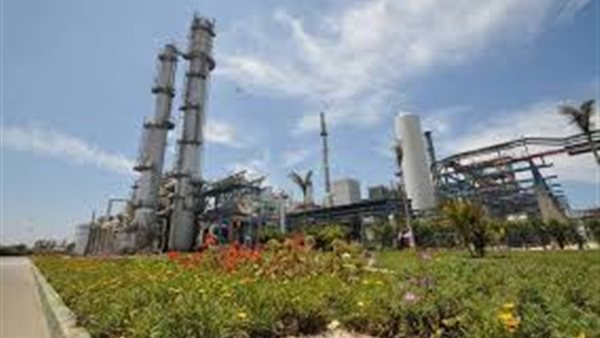
In light of increasing economic pressures and rapid changes in global energy markets, the Egyptian government took a new step that reflects the magnitude of the challenges it faces, as it announced raising the prices of gas supplied to fertilizer factories to $8.5 per million thermal units, an increase of approximately 21% from previous levels.
The decision, which was revealed by the Minister of Industry, came at a precise time in which local economic considerations overlap with the repercussions of international crises, most notably the escalation of tensions related to the Iran War.
Although the increase appears to be specific to a specific sector, its repercussions extend to broader areas within the economy, as the fertilizer industry is not just an industrial activity, but rather represents a mainstay of food security, as it is directly linked to crop production and the provision of food to citizens.
The government was also keen to stress that this step is not a prelude to a comprehensive increase in energy prices for factories, but rather a deliberate measure subject to careful calculations for the balance and continuity of the industry.
Behind the scenes, the picture reveals a difficult equation; With the rise in the cost of importing gas and oil, the state finds itself facing increasing financial pressures, which prompts it to gradually restructure the prices of some resources, without harming the stability of vital sectors. The government has previously resorted to reducing the share of subsidized fertilizers directed to the Ministry of Agriculture, in an attempt to compensate companies for high production costs, in a move that reflects its endeavor to balance supporting the industry and protecting the local market.
Despite these challenges, the scene has a brighter side, as Egyptian fertilizer exports recorded a remarkable jump during 2025, exceeding the $2 billion barrier, driven by increased global demand and supply chain disruptions, which gave the Egyptian product a competitive advantage in foreign markets.
In this context, Abdel Fattah El-Sisi’s warning was noteworthy, when he pointed out that the rise in fertilizer prices as a result of international crises may have a severe impact on the economies of countries, especially developing ones, stressing that the repercussions of these increases do not stop at the borders of the industry, but rather extend to the tables of citizens around the world.