

Saturday 11/April/2026 – 11:16 AM
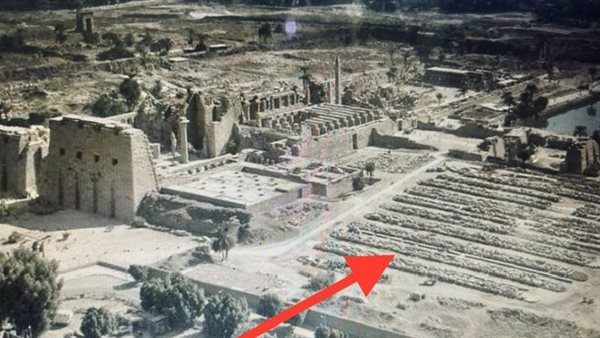
The Egyptian-French Center for the Study of the Karnak Temples in Luxor (CFEETK) has begun implementation preparations for the project to rebuild and construct the shrine of King Amenhotep I in the open museum area north of the temples.
Reconstruction and construction of the shrine of King Amenhotep I
The necessary financial funding was provided for the project, in preparation for the completion of all work during the years 2026 and 2027.


Cabin history and construction materials
The shrine is one of the first shrines built inside Karnak at the beginning of the New Kingdom, the 18th Dynasty, during the rule of King Amenhotep I 1527 – 1507 BC.
The cabin was built using white stone blocks extracted from the Dababiya quarries south of Luxor. It differs from the limestone in the Tora region, as the Dabbabiya stone is relatively weaker.
The dimensions of the shrine are 40 by 55 metres, and it is believed that its original location was in the vicinity of the Holy of Holies.
A story of discovery and reassembly
The shrine was dismantled in the past, and King Amenhotep III used its stones as a filler inside the third pylon on the east-west axis of the temple. In 1920, the stone blocks were found again.
The number of blocks discovered reached about 1,600 blocks, bearing prominent inscriptions of King Amenhotep I offering sacrifices to deities such as Amun Ra and Amun Min, in addition to ritual scenes of Dam Day celebrations.
Restoration and modern studies
The team, led by Dr. Luc Gabold and Jean Carlotti, has completed approximately 90% of the cabin’s drawings and layouts in preparation for its installation.
At the same time, a team of restoration specialists is preserving and strengthening the limestone on the terraces near the Sheikh Labib warehouse, under the supervision of restorer Anis Aubusier.