
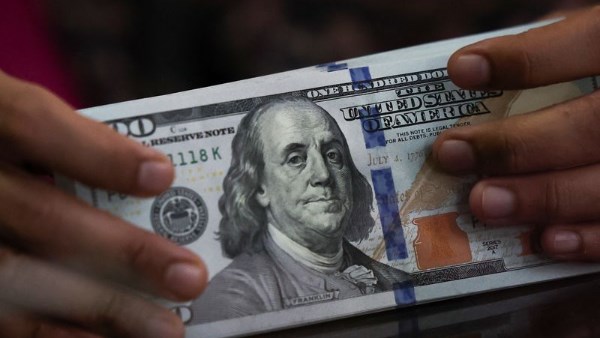
The US dollar, which is considered a safe haven, rose during Tuesday’s trading as investor sentiment deteriorated due to the rapid escalation of the war in the Middle East, while the Australian dollar moved erratically after hawkish signals from the central bank governor following a narrow vote on raising interest rates.
The euro fell by 0.23% to $1.1479, approaching its lowest level in more than seven months, which it recorded on Monday. The British pound also fell by 0.3% to $1.3279.
The dollar index, which measures the performance of the US currency against six major currencies, rose by 0.19% to 100.05 points, bringing its gains to about 2.5% since the outbreak of war between the United States, Israel and Iran at the end of last February. According to what was reported by the American (Investing) website.
Mutual attacks between the parties to the conflict are still continuing as the war enters its third week, while the vital Strait of Hormuz remains largely closed.
US allies also rejected President Donald Trump’s request for help in reopening the sea lane, sending energy prices soaring and fueling inflation fears.
The jump in oil prices led to a sharp repricing of interest rate expectations globally, which supported the US dollar against most currencies as investors moved towards safer assets.
Economists said, “Market positions tended to sell on the dollar, but declining expectations for rate cuts, coupled with the conflict with Iran and rising risk premiums in energy, made the dollar the most obvious hedging tool.”
He added that the uncertainty associated with developments in the Middle East may allow the dollar’s strength to continue in the near term as long as the risks of war and the oil premium remain high.
As expected, the Reserve Bank of Australia raised interest rates by 25 basis points to 4.1% after inflation accelerated, but the tight vote within the Monetary Policy Board initially pushed the Australian dollar back to $0.7050 before later settling near $0.7057.
Five members of the bank’s board voted in favor of raising the interest rate, compared to four against it, in the closest decision to division since the bank began publishing the results of the vote last year.
In its statement, the bank indicated that there is a “substantial risk” that inflation will remain above target for a longer period than expected, with the possibility that uncertainty in the Middle East will lead to increased inflationary pressures globally and locally.
The Australian Bank’s decision marks the beginning of a series of eight central bank meetings around the world this week, as investors watch policymakers’ statements to assess the impact of the war on inflation and growth.
Most major banks, including the US Federal Reserve, the Bank of England and the European Central Bank, are expected to keep their monetary policies unchanged for now, while attention is focused on future guidance.
The Japanese yen fell to 159.40 yen to the dollar, approaching the sensitive level of 160, despite verbal warnings from the Japanese authorities on Tuesday.
Analysts expect that intervention to support the currency will become more difficult than before due to the rise in oil prices.
The yen fell by more than 2% against the dollar during the month of March.
Bank of Japan Governor Kazuo Ueda said that core inflation is accelerating towards the 2% target, ahead of the two-day monetary policy meeting that ends Thursday, amid widespread expectations that the bank will keep interest rates unchanged.