
Saturday 13/December/2025 – 11:44 AM
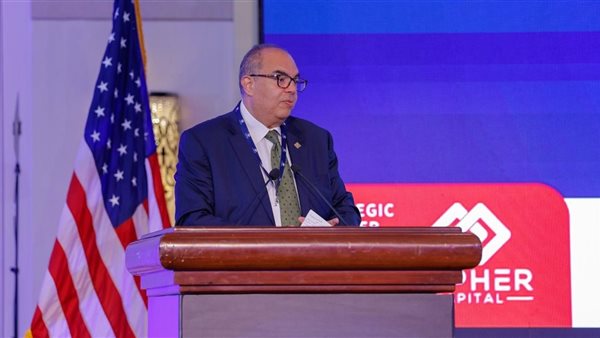
Dr. Mahmoud confirmed MohieddinThe envoy of the United Nations Secretary-General for financing sustainable development, who is assigned by the Secretary-General of the United Nations to head a group of experts to provide solutions to the global debt crisis, said that dealing with the effects of developments in American economic and trade policies requires the countries of the Middle East and North Africa to diversify economic relations, enhance regional cooperation, and accelerate investment in developing human capital and implementing digital and green transformations.
This came during his keynote speech entitled “The Impact of American Policy Developments: Global and Regional Implications” at the thirteenth annual regional conference of the American Chamber of Commerce in the Middle East and North Africa (AmCham MENA), which was hosted by the Dubai Chamber of Commerce in cooperation with the Regional Council of (AmCham MENA), with the participation of senior officials from the two chambers and a large number of economists and businessmen.
Controlling technological and financial institutions
In his speech, Mohieldin pointed out the profound transformations taking place in the international system, and the impact of the United States’ monetary, financial, technological and industrial policies on the global economy, explaining that the global scene is now characterized by two centers of economic and geopolitical gravity, the first of which is the system led by the United States, which includes the dominance of the US dollar and control of technological and financial institutions such as the International Monetary Fund and the World Bank, and the second is the wing of the rising powers, especially in Asia, led by China and India, which now represent about 60% of the global GDP by force. Purchasing.
Implementing technological export controls
Muhyiddin said that the dollar’s pivotal role in global finance means that the US Federal Reserve’s decisions on interest rates trigger immediate and long-term global multiplier effects on capital flows and the cost of debt in emerging markets.
He stated that protectionist trade and industrial policies, including the provision of industrial subsidies and the application of technological export controls, have a direct and strong impact on the economies of developing countries and push global supply chains to transform.
Mohieldin concluded that the new global landscape requires countries in the Middle East and North Africa region to strengthen their ability to withstand, pointing out that the priorities of the region’s economies must include strengthening national financial systems and developing local currency-denominated debt markets to reduce dependence on dollar borrowing, strategic diversification by building deeper economic relations with multiple blocs, dealing with both wings of the global system without taking sides, and investing in the future by pushing investments in human capital, digital skills and green transformation, as well as enhancing regional cooperation, while taking advantage of Successful models such as the ASEAN experience.
Mohieldin proposed three areas to deepen cooperation between the United States and the countries of the Middle East and North Africa, namely expanding the business and investment corridor, enhancing the enabling environment for trade through regulatory cooperation, and expanding sectoral partnerships such as the sectors of green hydrogen, digital transformation, and food security.
Mohieldin concluded his speech by emphasizing that the goal is not merely to withstand external shocks, but rather to transform these developments into engines for sustainable and comprehensive progress at the region level.