

Thursday 19/March/2026 – 05:28 AM
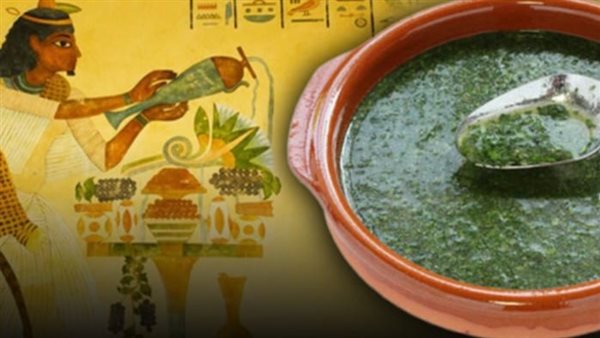
Count Molokhiya It is one of the most famous dishes that crown Egyptian tables, but its history contains many stories in which historical reality is mixed with popular legends. Egyptian popular dishes
Secrets of the food of kings and the truth of the Hyksos myth
While some circulate stories about the Hyksos forcing Egyptians to eat it thinking it was a poisonous plant, documented scientific and historical studies confirm that Egypt and the Nile Valley are the original homeland and true origin of this plant, according to the Journal of Ethnic Foods.
Scientifically, the molokhia plant belongs to the genus Corchorus olitorius, and researchers agree that the Egyptian environment, thanks to the sedimentary soil of the Nile River and its favorable climate, was one of the oldest environments known for its cultivation and use as food, according to what was stated in a study published in the Journal of Ethnic Foods for the year 2023.
Although no written Pharaonic cooking recipes have been found for the dish in its current form, archaeological studies and tomb inscriptions have proven the abundance of leafy vegetables in ancient Egyptian food, including this plant, according to the Explore Luxor website and the Journal of Ethnic Foods.
On the other hand, common stories about the ancient Egyptians considering molokhiya a poisonous plant, or that the Hyksos forced them to eat it, are merely later traditional narratives that are not supported by any archaeological evidence or contemporary historical text.
With the advent of the early Islamic eras, the status of molokhiya was established in Egypt, and it later moved to the countries of the Levant and the Maghreb through the movement of trade and population, becoming an authentic part of Middle Arab cuisine.
The oldest explicit written documentation of the molokhiya recipe dates back to the fourteenth century AD, when it was mentioned in the Egyptian cookbook “Kanz al-Fawaid fi diversifying the tables,” which proves its strong roots before the Ottoman era, according to Explore Luxor.
As for the naming, many researchers believe that the word “Mulukhiya” is derived from the linguistic root indicating the word “Malukiyya,” due to its introduction in the palaces and its association with the Fatimid narratives. However, researchers point out that this linguistic shift from the letter kaf to the kha does not have a conclusive linguistic text to document it.
One of the most notable and strangest confirmed political milestones in the history of the dish was what was documented by the prominent Egyptian historian Taqi al-Din al-Maqrizi, who died in 1442 AD, when the Fatimid Caliph al-Hakim bi-Amr Allah issued an official decree in 1005 AD 395 AH prohibiting the eating of molokhiya. This ban was based on medical and moral beliefs prevailing at the time that considered it a “fortifying” meal, before this ban was later lifted during the reign of his apparent successor.
The cultural impact of this historic decision continues to this day, as some members of the Druze sect avoid eating molokhiya out of reverence for Al-Hakim Bi-Amr Allah, which represents a continuing cultural impact of a political decision, and not the result of a dietary belief.
From the Nile Valley to international tables
Starting from the late Middle Ages, molokhiya was no longer limited to Egyptian cuisine, but rather crossed the borders to spread in the Levant, North Africa, and Sudan, where its preparation methods varied between using fresh leaves, chopped leaves, or even dried powder, as is the case in Tunisia.
The fact that the dish retains its Arabic name in most of these regions indicates its strong Egyptian origin and its clear cultural and nutritional transmission across generations, according to The Markaz website. As for details such as gasping during cooking, they remain part of the beautiful Egyptian folk heritage.