

Wednesday 25/March/2026 – 01:14 PM
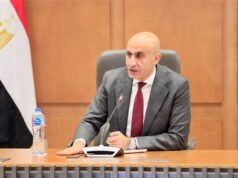
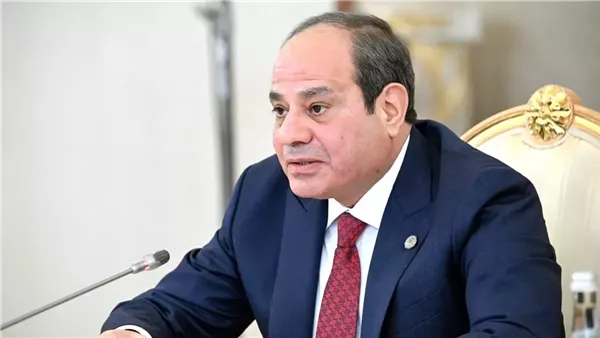
Today, President Abdel Fattah El-Sisi met with Prime Minister Dr. Mostafa Madbouly, Dr. Hussein Issa, Deputy Prime Minister for Economic Affairs, Lieutenant General Engineer Kamel Al-Wazir, Minister of Transport, Dr. Mohamed Farid Saleh, Minister of Investment and Foreign Trade, and Engineer Khaled Hashem, Minister of Industry.
The official spokesman for the Presidency of the Republic stated that the President followed up during the meeting on the government’s efforts with regard to supporting investment and foreign trade files and the connection between this and supporting local industry, based on the government’s commitment to encourage investment, support the industrial sector and enable it to perform its role. Continuing to arrange the necessary needs to provide production requirements and raw materials required for factories.
In this regard, the President stressed the need to work to remove all challenges facing the various investment and industrial sectors, to localize and encourage industry in partnership with the private sector, increase local investments and attract more foreign and Arab investments within the framework of transforming Egypt into a regional industrial center.
Ambassador Mohamed El-Shenawy, the official spokesman, indicated that during the meeting, the issue of protecting local industry from harmful commercial practices and containing the pressures facing industries due to high production costs was discussed, within the framework of the state’s desire to enhance the productive capabilities of local industries, especially in light of the challenges witnessed by the global market, in order to preserve and develop the investment climate and attract more investments and expand existing ones.
Al-Sisi stresses protecting the Egyptian economy from the effects of harmful practices in international trade
The official spokesman stated that the President stressed the importance of protecting the Egyptian economy from the effects resulting from harmful practices in international trade, stressing the need to ensure the stability of production chains, while working to provide safe levels of foreign exchange reserves capable of securing the strategic needs of basic commodities, as well as production requirements for factories.