
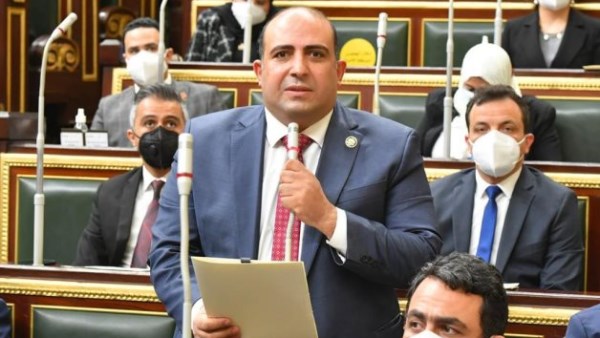
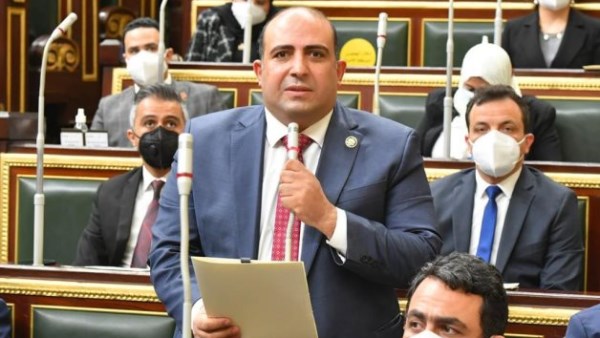
Presented by Representative Mohamed Salim, Member House of RepresentativesBy requesting a briefing to Counselor Hisham Badawi, Speaker of the House of Representatives, addressed to the Prime Minister, the Minister of Investment and Foreign Trade, the Minister of Transport, and the Minister of Agriculture and Land Reclamation, regarding the repercussions of the American-Israeli war on Iran and its potential repercussions on the movement of Egyptian exports, supply chains, and foreign trade.
Saleem explained that the recent geopolitical developments in the region, most notably the military escalation between the United States and Israel on the one hand, and Iran on the other, have cast a shadow on the movement of international trade and global supply chains, which has begun to be reflected in the movement of regional shipping, especially in the regions that represent major arteries of global trade.
The member of the House of Representatives pointed out that the continuation of the conflict and its expansion raises fears of greater disruptions in the maritime transport sector, in light of the increase in shipping and insurance costs, in addition to the possibility of delayed arrival of shipments or change in their navigation routes, which may directly reflect on the movement of Egyptian exports during the coming period.
Selim stressed that a number of major export sectors depend to a large extent on the regular movement of maritime freight, most notably the sectors of agricultural crops, food industries, engineering and chemical industries, and building materials, which represent an important percentage of the total Egyptian non-oil exports.
He added that rapidly perishable agricultural crops are among the sectors most vulnerable to damage from any disruption in shipping movement or delayed arrival of shipments to foreign markets, which may result in economic losses for exporters and producers, in addition to the possibility of pressure on local markets if large quantities of products intended for export are redirected to the internal market, pointing out that the repercussions of the crisis are not limited to exports only, but also extend to the supply chains of the Egyptian industry, in light of the possibility of delayed arrival of raw materials, intermediate goods, and production requirements. Which may affect the ability of some industrial sectors to adhere to production and export plans during the coming period.
Selim also warned that the continued disruption of global shipping traffic and the diversion of some shipping lines away from the region may lead to a noticeable increase in transportation and shipping costs, which may weaken the competitiveness of Egyptian exports in a number of foreign markets, especially nearby markets that represent major destinations for Egyptian products, especially the markets of the Gulf countries.
Representative Mohamed Selim explained that these developments come at a time when the state is seeking to double the volume of non-oil exports, as Egypt’s non-oil exports amounted to about 48.6 billion dollars during the year 2025, while the government aims to raise them to about 55 billion dollars by the end of the current year, which requires maintaining the stability of the foreign trade system and providing the necessary support to exporters to confront urgent international changes.
Slim called on the government to clarify the extent of its readiness to deal with these developments, and whether there are clear emergency plans to mitigate the repercussions of the current crisis on the movement of exports and supply chains, especially if the escalation in the region continues for a longer period.