

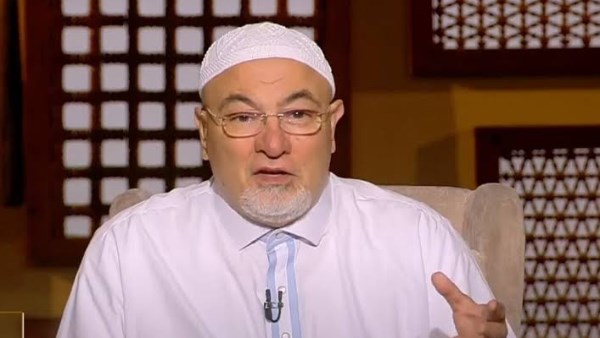
Confirm Sheikh Khaled Al-Jundia member of the Supreme Council for Islamic Affairs, said that God Almighty’s saying: “Man is the most controversial of all things” opens an important door to understanding the meaning of controversy, explaining that controversy in its origin may be understood as a pointless discussion or a conversation for the sake of talking, but it is not always reprehensible as some people think.
The member of the Supreme Council for Islamic Affairs added during a special episode entitled “Dialogue of Generations” on the program “May They Understand”, broadcast on the “DMC” channel, today, Wednesday, that the controversy is divided into two types: An argument intended to reach the truth, and an argument intended to support falsehood, confirming that the Holy Qur’an itself referred to both types, as it ordered argumentation in places such as: “And argue with them in a way that is best,” and forbade it in other places.
He explained that praiseworthy debate is one whose goal is to reach the truth, not victory for oneself, stressing that the Prophet, may God’s prayers and peace be upon him, did not deny women’s argument in Surat Al-Mujadala, because her argument was a quest for the truth, stressing that “arguing in order to reach the truth is a support for the truth.”
He pointed out that one of the signs of reprehensible debate is the rejection of axioms, explaining this with a simple example, as it is not possible to continue a discussion with someone who denies axioms, like someone who questions clear facts, pointing to the poet’s saying: “And nothing is right in the mind if the day needs evidence,” which means that denying the obvious spoils any dialogue.
He stressed that there are two basic conditions for knowing a praiseworthy debate, which are chastity of speech and faithful transmission, explaining that whoever lacks these two conditions will not be taken into account in the discussion, citing practical situations in which he demonstrated the danger of attributing statements to others without evidence, stressing that the absence of faithful transmission spoils the dialogue and makes it lose its value.