

Sunday 15 March 2026 – 11:06 PM
Company managed Technology From making a huge leap by transferring the entire brain of a fruit fly to a complex virtual environment similar to the world of the Matrix, in an unprecedented scientific achievement that opens entirely new horizons.
A new technique to transfer the fruit fly brain into a virtual environment
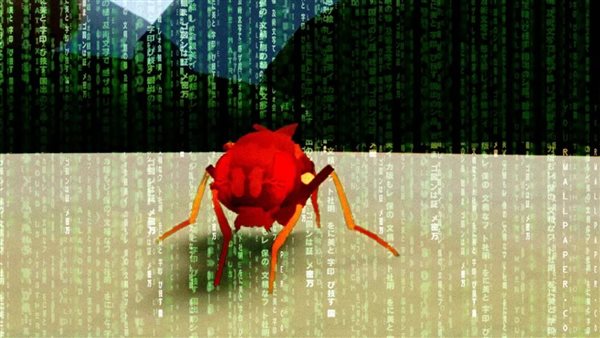
This major revolutionary step aims to build an accurate and comprehensive simulation of neural connections, allowing this digital mind to fully control the body of a virtual insect to perform natural behaviors such as walking and eating.
This pioneering achievement is considered an ambitious preliminary step for future projects that seek to simulate the brains of larger creatures such as mice, leading to the greatest dream of completely simulating the human mind, as these complex experiments raise profound questions about the future of technology, and the intersection of biological organisms and computer systems.
According to Futurism magazine, artificial intelligence seeks to imitate the mind, but Eon Systems took a different tack by mimicking the 125,000 cells and 50 million synaptic connections that the adult fruit fly brain has, letting it wander around in a virtual environment.
Co-founder Alex Weissner-Gross shared a video showing the insect moving its legs and drinking from a bowl.
He explained that this represents the first embodiment of a comprehensive simulation that produces multiple behaviors, where sensory input flows and a motor command executed by a virtual body comes out, closing the loop of perception and action.
The experiment was based on the research of scientist Philip Shiu in Nature magazine in 2024, and they used the FlyWire wiring diagram to create a model that predicted the motor behavior of the fruit fly brain with 95% accuracy.
The team took advantage of the NeuroMechFly v2 simulation framework to integrate the mind with a simulated physical body, an achievement that surpasses a 2025 study by DeepMind for reinforcement learning.
The company next hopes to mimic a mouse brain that has 500 times more cells than a fruit fly brain, down to a human scale. The researchers believe that the fruit fly brain’s success in closing the sensorimotor loop makes the next challenge a matter of scale.