


Thursday 05 March 2026 – 09:22 AM
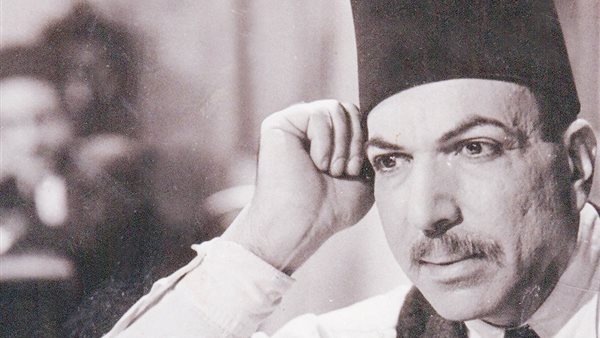
Today marks the birth anniversary of the artist Zaki Rostom, one of the pillars of Egyptian cinema and the creator of characters who left an unforgettable mark on the screen.
Anniversary of the birth of the artist Zaki Rostom
Zaki Rustom was born on March 5, 1903, and his works were distinguished by the diversity of his roles between the evil and the funny, the firm man or the wise father.
His father died when he was a child, so his father’s friend, Mustafa Bey Naguib, the father of the artist Suleiman Bey Naguib, who remained one of his closest friends throughout his life, took care of him. This early support allowed him to communicate with a number of prominent theater artists at that time, including the artist Abdel Wareth Asar.
Zaki Rustom practiced sports since his childhood, and excelled in weightlifting, where he won the championship in 1923 before completing his baccalaureate degree. His interest in acting began during his baccalaureate studies in 1924, when George Abyad noticed him and included him in his theater group.
Despite the aristocratic family’s expectations that he would study law, he chose to pursue art, which caused his mother to become paralyzed out of grief over his choice. This had a major impact on his life, and he then moved to live in the Yacoubian Building in central Cairo, where he lived for the rest of his life. He joined several prominent theater groups, including the Ramses troupe with Ahmed Allam, the Fatima Rushdi and Aziz Eid troupes, and then the National Troupe in 1935.
He entered the world of cinema with the silent film Zeinab in 1930, and participated in the first Egyptian talkie film, The White Rose, in 1932.
Works by Zaki Rostom
He continued to work in cinema for more than 30 years, and played various roles that included the aristocratic pasha, the caring father, the teacher in the vegetable market, the bully, the employee, the lawyer, and the cruel husband, but the roles of evil were his distinctive mark.
Zaki Rostom was known for impersonating his characters with extreme precision, from the character’s clothing to experiencing the atmosphere of the place during filming, which made his works in films such as Raseef Number Five, Al-Fatwa, and River of Love, immortal in the memory of Egyptian cinema.
He was distinguished by his isolated life. He had few friends and did not marry throughout his life. In the early sixties, he began to gradually lose his hearing until he became deaf, which forced him to stop working. He lived in his apartment in central Cairo with his dog and his servant until his death of a heart attack in 1972 at the age of 69 years.