

Saturday 11/April/2026 – 06:02 AM
The Senate Health Committee, headed by Hisham El-Sheshtawy, and in the presence of the bureau, which includes Hussein Khudair, Sherif Wadih, and Khaled Qandil, discussed the proposal submitted by Representative Amira Saber regarding “establishing a national bank for human tissues and facilitating post-mortem tissue donation procedures,” in the presence of high-level representatives from the ministries of health and higher education, in addition to Ahl Masr Hospital and the Armed Forces Medical Research Center.
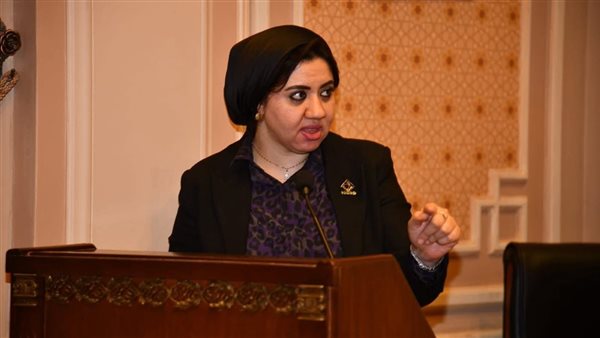
Amira Saber: Establishing a national human tissue bank is a necessary step
During the meeting, the representative of the Egyptian Democratic Party reviewed the constitutional and legal framework regulating organ transplantation, most notably the Law Regulating Human Organ Transplantation No. 5 of 2010 and its amendments and its executive regulations, pointing to the challenges facing the implementation of the law, whether at the level of infrastructure for organ and tissue banks or weak societal awareness of the culture of donation after death.
Saber stressed that Egypt’s delay in this file compared to a number of countries represents one of the aspects of inequality in the right to treatment, in light of the link between obtaining life-saving tissues and financial ability or proximity to specific institutions, in contravention of the constitutional obligation to guarantee the right to health without discrimination.
The Senator explained that the current legislative framework criminalizes trafficking in organs and tissues and sets strict legal and ethical controls, but its effectiveness remains dependent on the presence of executive policies and institutions capable of implementation, oversight and accountability.
She called for the necessity of facilitating procedures for post-mortem tissue donation, and clearly publishing its conditions and controls, in addition to creating a national electronic registry for donors in which registration can be made via an electronic portal or smart phone applications, while activating coordination between hospitals and intensive care units, and cooperating with religious institutions to launch awareness campaigns confirming the legality of donation.
For his part, Hossam Abdel Ghaffar, representative of the Ministry of Health, confirmed that the Ministry is already working to establish a national bank for human tissues and facilitate donation procedures, as a necessary step to address a chronic gap in the health care system, especially for patients with burns and severe deformities, noting that this trend reflects the bias of public policies to transform the right to health into a tangible reality.
He revealed that the Ministry is in the process of establishing a tissue bank within Nasser Institute Hospital, as part of a plan to develop it as a national center for organ transplantation, with the launch of an electronic website within 60 days to inventory and register donors.
Major General Doctor Khaled Amer, Center for Medical Research and Regenerative Medicine of the Armed Forces, also announced the opening of the Tissue Transplantation Department at the Center for Medical Research and Regenerative Medicine of the Armed Forces in April 2027, using advanced technologies including stem cells and tissue engineering.
Hisham Zaki, Head of the Central Administration for Treatment Institutions and Licensing, stressed the need to establish strict regulatory controls to prevent any commercial or exploitative practices in the donation system, while ensuring complete transparency and fair tissue distribution according to medical need.
The discussions witnessed interventions from a number of specialized doctors, in addition to the participation of members of the Health Committee from the Parties Youth Coordination and politicians.
At the conclusion of the meeting, the committee recommended starting to establish a national system for a human skin bank to treat burns and critical cases, while gradually expanding to the rest of the tissues, and establishing a unified national path for posthumous donation starting from registering the prior wish until allocation, in addition to preparing a code of honor and ethical governance to ensure transparency, preserve the dignity of the deceased, and achieve justice in medical use.