Saturday 14/March/2026 – 07:29 AM
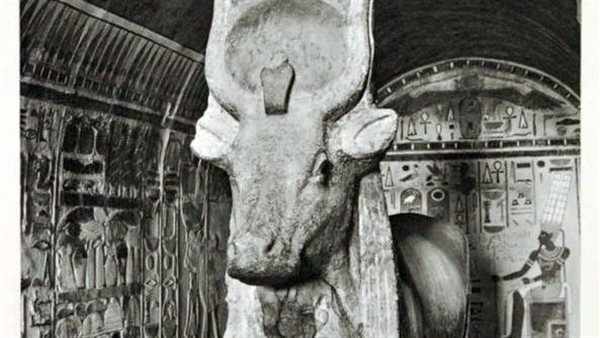
The administration of the Egyptian Museum in Tahrir published, on its official Facebook page, a rare archival photo of one of the most beautiful and unique pieces in Hall No. 12 on the ground floor, which is the shrine of the goddess Hathor. This shrine is considered one of the most prominent masterpieces of ancient Egyptian art, as it embodies the convergence of the religious and artistic dimensions in an integrated image.
Cabin of the goddess Hathor
The cabin was discovered in Deir el-Bahari in Luxor, and dates back to the Eighteenth Dynasty, specifically during the reign of King Tuthmosis III and his son Amenhotep II. The cabin was carved from colored limestone, depicting the goddess Hathor in the form of a cow emerging from the western mountain of Thebes (the other world), surrounded by papyrus trees that symbolize the forests of the Nile Delta, which reflects the ancient Egyptians’ connection with the environment and nature in their religious symbols.

The interior features delicate carvings showing the king in a worship position under the head of a cow, breastfeeding it, in a symbolic scene that reflects the king’s divine protection and care, and embodies the special relationship between the goddess and the king, a central element in ancient Egyptian art and religion.
This piece is considered a rare artistic and historical testimony that reflects the ancient Egyptian artist’s ingenuity in expressing spiritual and political concepts, while preserving accurate and colorful details.