
Monday 06 April 2026 – 10:34 AM
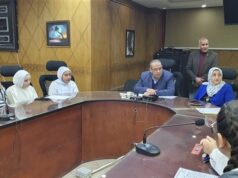
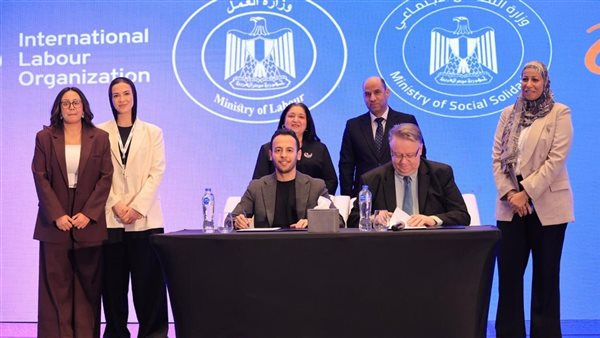
The Minister of Labor, Hassan Raddad, witnessed the activities of the “iSchool Forum for the Digital Future”, held in Cairo, to announce a joint project that brings together the Ministry of Labor, the Ministry of Social Solidarity, the International Labor Organization (ILO), and the iSchool Company, and aims to empower children, through technological education and digital skills development… in the presence of Engineer Margaret Sarofim, Deputy Minister of Social Solidarity, Mr. Eric Ochlan, Director of the ILO Office in Cairo, and Engineer Mohamed Gawish, co-founder and CEO of the company. iSchool, along with representatives of international organizations, the private sector and development partners.
In his speech during the forum, the Minister stressed that holding this event reflects the Egyptian state’s belief in the importance of concerted efforts and partnership between the government, international organizations, the private sector and civil society to manage national files, most importantly investing in people and building their capabilities from the early stages of life.
He explained that the iSchool Forum represents a practical model of the state’s vision of investing in children and empowering them with the tools of the digital age, noting that the Egyptian government, under the directives of President Abdel Fattah El-Sisi, is working to provide real opportunities for new generations to acquire programming skills, artificial intelligence, and modern technology, which will open up broader horizons for them for a better future.
He pointed out that the issue of protecting children is at the top of the state’s priorities, stressing that this was embodied in Labor Law No. 14 of 2025, which established strict controls prohibiting the employment of children before the age of fifteen, while organizing their training in a way that does not affect their education or natural development, pointing out that the law was the result of dialogue and consultation with labor and development partners and is compatible with national legislation and international labor standards.
The Minister also stressed the Ministry’s continued efforts to implement the national plan, which aims to provide all types of support and protection for children and their families, in cooperation with a number of ministries, national agencies, the International Labor Organization and civil society organizations, noting that work is currently being done to prepare the second generation of this national plan in line with the state’s priorities and to build a human being capable of innovation and competition regionally and internationally.
The Minister added that the state’s role is not limited only to protection, but extends to “proactive empowerment” by providing safe educational and training paths that absorb children’s energies and open up learning and development opportunities for them, stressing that training initiatives in technology and digital skills represent an important step towards integrating new generations into the digital economy in a safe and legal manner.
At the conclusion of his speech, the Minister praised this initiative, stressing his keenness to follow up on its results and expand the number of its beneficiaries and its geographical scope, which contributes to preparing a conscious generation capable of keeping pace with the global digital transformation, and stressing the importance of young people’s involvement in the digital labor market being accompanied by legal and legislative awareness that protects their rights.

For her part, Engineer Margaret Sarofim, Deputy Minister of Social Solidarity, expressed her happiness at participating in the forum, stressing that true empowerment is not limited to social protection, but extends to capacity building and opening new horizons for a decent life, noting that cooperation with the Ministry of Labor, iSchool Company, and the International Labor Organization comes within the framework of enabling the most needy children to acquire future skills in the fields of technology and programming.
She explained that the Ministry of Social Solidarity supported the pilot program by providing the necessary logistical needs for training, and working with partners to ensure the provision of an integrated educational experience that combines digital learning and preparation for the labor market, stressing that the initiative represents a true model of integration between state institutions, international partners, and the private sector to achieve sustainable development.
Sarofim indicated that the Ministry was keen to support this pilot program, which in its first phase targets a number of children from the SCREAM program, and that the initiative represents a true model of integration, stressing the Ministry of Social Solidarity’s full commitment to supporting such initiatives, working to expand them, maximizing their benefit, and linking them to our various programs in economic empowerment and capacity building, as investing in children is an investment in the future of the nation, and that training in technology and the fields of digitization achieves electronic awareness, optimal use of technology, and protection from exploitation. Cross,misinformation.