


Thursday 26/March/2026 – 12:22 AM
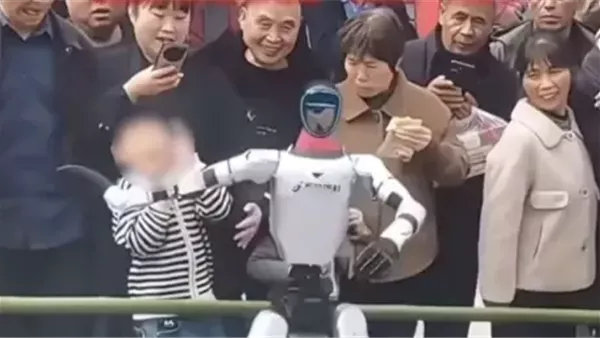
A video clip circulated sparked controversy on social media, after it appeared Robot A humanoid accidentally slaps a child during a dance performance in China.
A sudden incident during an entertainment show
According to media reports, the incident occurred on March 21 at an event in Shaanxi Province, where the robot was performing a dance performance in front of an audience inside an area surrounded by a fence.
The video shows the robot performing normal stunts at first, before suddenly swerving towards the audience and extending its arms, bumping into a child and unintentionally slapping him in the face.
The operators quickly intervened and pulled the robot away from the show site, but it continued to move for a few moments, which increased the state of anxiety among those present.
The clip sparked widespread interaction, as a number of users expressed their concerns about the dangers of using robots in public performances, especially in crowded places.
“This shows that we are still far from completely relying on unsupervised robots,” one commenter wrote, while another noted that being hit with a metal object can be painful and dangerous.
Information indicates that the robot shown in the video is a G1 model, developed by the Chinese company Unitree Robotics, and is used in the fields of research, education, and commercial applications.
This type of robot is characterized by advanced motor capabilities, as it contains precise sensors and about 23 movement points in its joints, which enables it to perform complex movements such as dancing and overcoming obstacles.
This is not the first incident of its kind, as similar cases of robots that went out of control during operation have previously been recorded, including an incident where one of the operators was kicked during a previous experiment, and another that frightened an elderly woman in Macau.
These incidents revived the discussion about the necessity of strengthening safety measures when using robots in public places, especially with the increasing reliance on them in entertainment shows and commercial activities.