

Friday 20/March/2026 – 08:51 PM
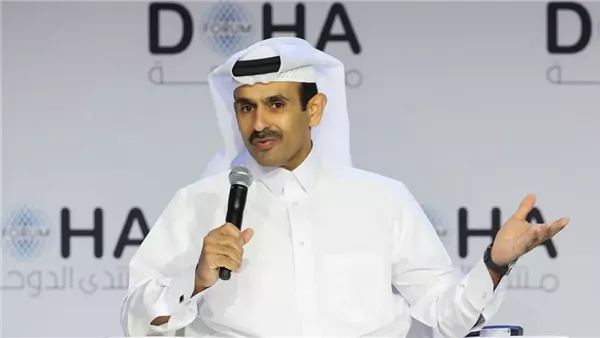
The Qatari Minister of Energy and CEO of Qatar Energy Company, Saad Al-Kaabi, revealed behind the scenes of extensive contacts he had with officials and the Energy Administration in the United States, warning of the disastrous consequences of targeting Iranian oil and gas facilities on countries in the region and the world.
Qatari Minister of Energy: 17% of gas exports stopped
Al-Kaabi confirmed that he had alerted Qatar’s international partners, led by ExxonMobil, ConocoPhillips and the White House, to the need for restraint and to avoid harming the energy infrastructure, stressing that any escalation in this file would cause direct harm to everyone, which was actually embodied in the attack that targeted the Qatari Ras Laffan facility, according to Reuters.
Regarding international reactions, the US Department of Energy referred questions to the White House, where its spokesman, Taylor Rogers, stated that the US administration and President Trump are aware of the possibility of supply disruption in the short term and have developed plans to deal with this expected scenario.
On the other hand, ExxonMobil remained silent, while ConocoPhillips affirmed its commitment to partnering with Doha to support the economic recovery path.
Regarding the scale of the field disaster, Al-Kaabi explained that the attacks, which came in response to Israel’s targeting of Iran’s South Pars field, led to the complete destruction of the main cooling units in Ras Laffan, causing the cessation of 17% of Qatar’s gas export capacity.
He pointed out that these damages, which affected facilities amounting to $26 billion, will affect gas supplies heading to Europe and Asia for a period that may reach five years, stressing that Qatar did not receive any prior warning about the attack that affected the joint field between the two countries.
In terms of future plans, Al-Kaabi announced that the war imposed a complete freeze on the North Field expansion project, which aimed to raise production to 126 million tons annually by 2027.
He explained that the evacuation of thousands of workers from the site led to the postponement of the delivery of future gas shipments to France, Germany, and China, suggesting that the resumption of operations would likely take months or years, with the condition that combat operations cease completely to begin the recovery phase, which will require at least three months to fully restore the pace of loading.
Al-Kaabi concluded his bleak vision of the scene by emphasizing that this war set the entire region’s economy back decades; Where tourism, trade, port traffic and aviation have completely stopped.
He warned that the Gulf countries, which depend mainly on energy revenues, would face a sharp decline in government spending as a result of the cessation of income, describing the current moment as indescribable, in reference to the shock left by the attacks on the progress of the company he had served since the 1980s.