

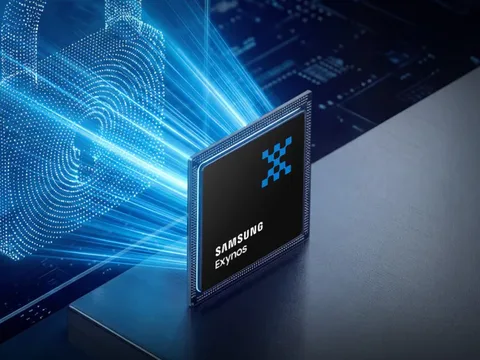
Leaked production timelines reveal that Samsung is accelerating the development of its 2nm Exynos 2700 chip to aggressively challenge Qualcomm’s dominance of the flagship smartphone market. Analysts expect a huge adoption rate of 50% in the Galaxy S27 series for next year, but early tests raise an important question about the ability of these devices to meet high expectations. Early in January of this year, a leak from a prominent leaker hinted that the company had already begun testing the new Exynos chip, and although this leak was initially treated with suspicion, recent reports now lend a degree of credibility to these claims.
According to Yonhap News Agency, the infrastructure for the Exynos 2700 chip is fully designed by late 2025. Extensive testing is currently underway at the company’s mobile phone division, with production-ready samples expected to appear between May and June, which is well ahead of the launch of the next Galaxy S series to ensure full readiness to compete in global markets.
It has become clear to everyone at this stage that Samsung intends to strongly regain its market share from Qualcomm’s Snapdragon processors. This strategic step comes after the company’s processors controlled a staggering 75% of the current Galaxy S26 series of phones, which prompted the Korean giant to reconsider its calculations and intensify its efforts to develop its own processors and reduce dependence on external suppliers.
To achieve huge cost savings estimated at more than $7.8 billion, the technology giant is betting on the second generation of 2-nanometer manufacturing accuracy to provide levels of productivity and efficiency comparable to those for which major companies such as TSMC are famous. The new chip is also likely to provide tangible improvements to the heat management technology used in the previous generation, and accordingly, analysts at Qium Securities expect that reliance on Qualcomm chips will reduce to 50% in the upcoming Galaxy S27 series of phones.
Despite these ambitious financial goals, the only physical evidence of this chip’s existence so far is a test board that appeared on GeekBench, which shows an unusual 10-core prototype with unimpressive scores in performance tests. Taking into account the possibility that this leak is fake, the burden of proof remains entirely on Samsung until a new wave of leaks emerges confirming the chip’s ability to deliver truly competitive speeds, and until then, Qualcomm has no real reason to worry about its position in the market.