
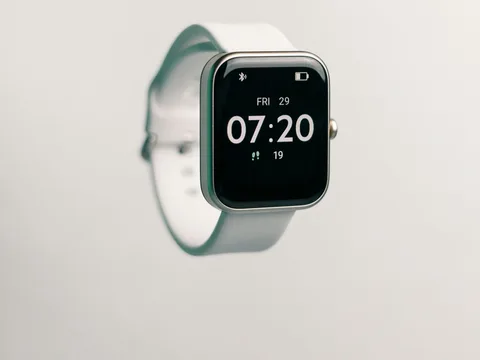
The world wastes more than 60% of its total energy in the form of waste heat without benefiting from it. To overcome this problem, a research team from the Institute of Chemistry of the Chinese Academy of Sciences has succeeded in creating a highly flexible material capable of converting heat directly into electricity without causing any environmental pollution. The scientific magazine Science published details of this innovation, which is represented by a porous thermoelectric polymer that provides a continuous source of energy for wearable devices such as smart watches by exploiting differences in ambient temperatures, such as the temperature of the human body.
The efficiency of these materials requires their high electrical conductivity while preventing heat leakage at the same time, an equation that is difficult to achieve using traditional flexible plastic. The researchers were able to solve this dilemma by mixing the polymer with a special separating agent, then removing it later to form a random network of tiny microscopic holes. This sponge-like structure suppresses the microscopic vibrations that normally transfer heat through solid materials, contributing to a significant reduction in heat loss of up to 72%.
At the same time, these tight spaces within the porous structure force the polymer molecules to fit together more tightly and organized than usual. This significant improvement in the structural alignment of the material creates highly efficient channels that allow electrical charges to pass very smoothly. This precise internal engineering contributes to enhancing the movement of electricity within the material and raising the efficiency of electrical transmission by no less than 25 percent compared to previously used traditional materials.
Thanks to this successful separation of the heat flow path and the electricity flow path, the improved membrane achieved a new record in the thermoelectric efficiency scale by recording 1.64 points at a temperature of approximately 70 degrees Celsius. This technical achievement sets a new and unprecedented standard in this scientific field, clearly surpassing the previous record for polymers, which amounted to only 1.28 points, and even exceeding the performance of flexible inorganic materials that were considered the best option until recently.
Unlike traditional high-performance materials that require complex and very expensive preparation steps, the researchers confirm that this new membrane can be manufactured on a large scale and at a low economic cost. The production process uses simple and practical spray coating techniques very similar to the printing methods of daily newspapers, paving the way for a true revolution in the self-powered electronics industry and bringing us one step closer to a future in which our personal devices depend solely on the heat of our bodies to stay powered.