
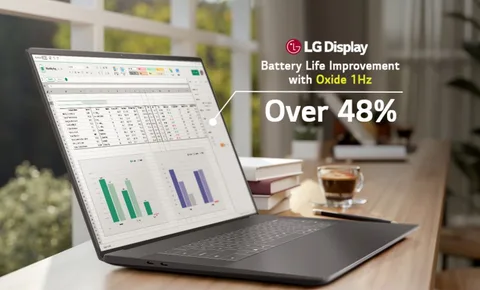
LG has officially begun production of laptop LCD panels that support variable refresh rates between 1Hz and 120Hz to deliver an exceptional visual experience. These innovative panels rely on an unspecified oxide material that is characterized by its superior ability to retain an electrical charge for much longer periods compared to traditional screen technologies, which significantly reduces the need to constantly update the screen at high frequencies and ensures image stability and complete clarity.
This advanced technology contributes to reducing the screen refresh rate with complete flexibility from 120 Hz down to just 1 Hz when displaying static content. This smart and noticeable reduction in refresh rates is reflected positively and directly in reducing the device’s overall power consumption, giving users longer operating periods for their laptop batteries and reducing their constant need to search for power sockets while on the move and completing daily tasks.
The use of oxide materials in the manufacture of screens is not considered a completely new matter in the world of advanced technology. The Japanese company Sharp preceded everyone by producing IGZO panels for televisions and smartphones, such as the Sharp Aquos R10 phone. The Chinese company BOE also reviewed multiple models of oxide screens with refresh rates reaching 500 Hz for laptops and down to 1 Hz for smartphones to effectively save energy consumption.

LG directs its current production of these advanced screens to support the leading Dell XPS laptops to meet the aspirations of professional users. LG plans to significantly expand its production range during the year 2027 to include more devices and brands, which confirms its firm commitment to developing display technologies and providing innovative solutions that contribute to improving the performance of smart devices and developing their competitive capabilities in global technical markets.
The administration confirms that these new screens provide a 48% increase in the duration of use with just one charge compared to traditional screens. This excellent percentage is considered very good news for users who rely heavily on power-consuming AI applications, as the company developed custom display algorithms and other assistive technologies in conjunction with the development of oxide screens to achieve this unprecedented level of energy efficiency and ensure stable performance.