
Despite the regional and economic challenges… and warnings of rising prices of basic commodities
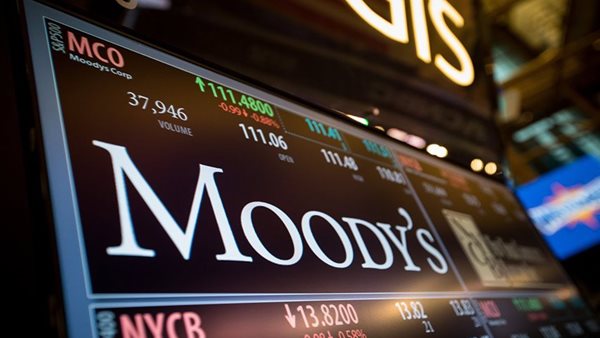
The global credit rating agency Moody’s confirmed Egypt’s sovereign credit rating at Caa1 while maintaining a positive outlook, in its latest report issued in early April 2026. This decision comes at a time when the region is witnessing a state of geopolitical tensions, in addition to continued global economic pressures and fluctuations in international financial markets.
Continuing the positive outlook despite the challenges
Moody’s explained that maintaining the positive outlook since March 2024 reflects relative confidence in the path of economic reforms implemented by the Egyptian government, especially with regard to improving financial and external indicators. The agency believes that continued commitment to public financial control policies and achieving large primary surpluses in the budget represents a factor supporting the stability of the current classification, and may even pave the way for its improvement in the future if reforms continue at the same pace.
She also pointed out that the monetary policies followed by the Central Bank of Egypt, especially with regard to reducing inflation rates and rebalancing the foreign exchange market, helped enhance macroeconomic stability during the recent period, despite the challenges associated with fluctuations in global exchange rates.
A relative improvement in financial indicators
According to Moody’s report, Egypt has succeeded since the fiscal year 2024 in achieving Large primary surplusesThis reflects an improvement in public financial management and increased efficiency of government spending. This performance also contributed to reducing pressure on short-term financing needs and improving the country’s image before international investors.
The agency believes that these indicators represent a positive step towards reducing dependence on high-cost external financing and enhancing the ability to manage public debt in a more sustainable manner. However, she stressed that this improvement is still at an early stage and needs long-term continuity to ensure that it is reflected in the credit rating more strongly.
Challenges of public debt and external financing
Despite these positives, Moody’s warned that Egypt still faces important structural challenges, most notably: High level of public debt And the continued fragility of the external situation. She explained that these factors make the economy more vulnerable to external shocks, whether related to energy prices, global monetary tightening, or fluctuations in capital flows.
The report also pointed out that large refinancing needs, whether at the local or external level, represent continuing pressure on public finances, especially in light of the broad public sector commitments. These challenges indicate that the debt reduction path will remain gradual and requires careful management of fiscal and monetary policies.

Potential external risks and social pressures
The agency also warned of the possibility of the Egyptian economy being affected by any external shocks such as rising oil or commodity prices, which could lead to increased pressure on the trade balance and foreign exchange reserves. She also pointed out that any rise in global commodity prices may reflect negatively on the purchasing power of citizens, which may lead to increasing social pressures.
Moody’s believes that the continuation of these pressures may limit the government’s ability to move forward with fiscal discipline policies, especially if they are accompanied by a slowdown in growth or a decline in foreign direct investment flows.
Rating structure and currency gaps
Moody’s kept the local currency rating ceiling at one level B1While the foreign currency ceiling was set at a level B3. The agency interpreted the gap between these levels and the sovereign rating as reflecting the nature of the Egyptian economy in terms of size and diversity, despite the continued dominance of the public sector over large parts of economic activity.
She also pointed out that the gap between the local and foreign currency ceilings reflects the risks of conversion and the availability of foreign exchange, in light of the continuing gap between dollar financing needs and official reserves. This means that the economy’s ability to confront external shocks is still partially constrained, despite the gradual improvement in some indicators.
Concluding reading
It can be said that Moody’s report presents a double picture of the Egyptian economy. On the one hand, there is significant progress in controlling public finances and achieving primary surpluses, and on the other hand, there are still structural challenges associated with public debt and external financing. Between these two aspects, the positive future outlook remains an indication of the possibility of improvement, but it is conditional on the continuation of economic reforms and the deepening of financial and monetary stability during the coming period.